The AD Leaf Studio West Palm Beach The AD Leaf Studio West Palm Beach

Social Media Marketing in {{lpg_city}} {{lpg_state}}

Why Is Social Media Important for Small Businesses?

In the past few years, B2B marketers were forced to change their strategy due to COVID-19 swiftly. To combat this, social media is the perfect solution to an un-wished change in networking, communication, and growth for many B2B companies. 

The top marketers of B2B companies are those who refocused stronger on their social media strategy. The best part of social media is creating a lasting connection with your audience, and social media has been a phenomenal way to grow your relationship with partners and potential prospects. 

B2B marketing is built upon human resources and relationships, even though the end goal is to sell products or services. Social media has been the key to unlocking and igniting these relationships without in-person events. In this graphic B2B, 64% of B2B marketers rate social media as the second-most important factor in their strategy. 

There are 5 things B2B marketers can do on social media: 

  • Build brand awareness
    • Tell your story across various platforms, share customer stories, and why you provide the services you offer. 
  • Generate leads 
    • Focus on your target audience by creating engaging and meaningful conversations.
  • Build a community
    • Listen to customers and what they have to say about your company.
  • Connect social media posts to opportunities
    • Drive social posts to your CRM to fully understand customers.
  • Measure marketing efforts
    • Research management and social media platforms to help you track key performance metrics (KPIs).

Social media allows B2B marketers to connect with their audience wherever they are: Twitter, Facebook, Linked In, Youtube, Pinterest, or any other notable platforms. 

Why do you need engaging content?

Creating engaging content for your social media platforms is what ultimately matters here. If you want your audience to engage and connect with you on social media, you have to speak to them! 

Employee Advocacy

Some marketers are allowing their employees to speak about their company online for them as a unique approach. Employee advocacy is the best way to gain trust with your audience. When employees genuinely love and support the company they work for, they love to share that with their friends and family online.

 Word of mouth marketing is highly effective. When employees share their work experiences they are in turn more authentic. Their audience is more likely to trust them; they also will feel more inclined to comment and engage with the content knowing they are speaking directly with an employee of the company. Several studies show that people are three times more likely to trust a company’s employee than the company itself. 

Get Started with Your Social Media Strategy

People follow social media accounts to get deeper information about a particular company they are interested in. So now the question is: I know I need to be on social media, but how do I make an effective strategy? 

  1. Identify questions you commonly get asked by customers
  2. Research and choose a social media tool to make things easier for your team
  3. Hire or train a team to execute your social media strategy
  4. Identify your competitors and collaborate
  5. Create a content calendar to organize your ideas

After establishing a defined strategy, ask yourself a few questions to ensure your strategy is adequate or if you need to adjust it. What are your goals? How do you plan on measuring them? What social media platform are you going to prioritize? How/who is going to post and attribute to social media? 

The Future of 2021 in Digital Marketing

In conclusion, look ahead to the future of digital marketing, it’s never too late. Create, define, and implement your social media strategy and blossom beyond where you could ever imagine. Use employees to build advocacy and trust online for your company. Furthermore, social media can help you reach a wide variety of audiences quickly. Now is the time, so don’t miss out! Social media has never been more remarkable. Schedule a consultation today, or complete our contact form! 

The Importance of Brand Awareness Ads

For marketers, the choice between brand awareness and lead generation can feel like a boxing match. ‘Awareness’ fights to increase the size of your audience, while ‘lead gen’ limits your audience to a group of people who are willing to trade their contact information for your services.

There’s a simple formula for choosing brand awareness or lead generation. To determine the best strategy for your social media campaign, consider the benefits and drawbacks of each. When used effectively, the two methods can complement each other, and there are times when you might need to focus on one more than the other.

For instance, if you have a brand that has just started its social media strategy and has little to no posted content and little to no followers on its page, it may be wise to start with a brand awareness or a reach ad. This will entice potential customers with awareness of your brand without asking them for their personal information or coming across as too salesy. This type of ad is simply meant to spread awareness without asking for anything from the viewer. 

Look! We’re here. We exist. Did you know that?

Brand awareness creates visibility for your brand and what you offer.

There’s a good reason that brand awareness is the first pick for most marketers. Brands need to focus on attracting attention before lead generation ads can succeed. If no one knows about your brand and what they offer, they are much less likely to fill out a form with personal information such as their phone number or zip code. That said, it’s not always the need for personal information that turns potential customers away, but the time it takes to fill out a simple form, especially if they know nothing about you or have never heard of you before. 

Brand Comprehension

So let’s say you’ve been running a brand awareness ad for a few months. Your ad recall lift is high. Your page has a decent amount of likes and follows in this short amount of time. People know you, and it’s starting to show. You have a base now. You now have brand comprehension because you’ve been running brand awareness ads for a few months. People see your ad and know who you are and what services you offer. Now is the time to transition to a lead generation ad.

This same audience has been seeing your brand awareness ads on their feed for a few months now, and all of a sudden, they desperately need the service that your brand offers. What are the chances they fill out your new lead form? Pretty high! BAM! Quality lead.

Brand awareness is what makes lead generation ads work. With brand awareness comes brand comprehension and knowing what your brand offers. 

Starting Cold

Alright. Now let’s go in the other direction, where you don’t have much of an audience or following on social, but you want to get going and start getting leads as quickly as possible. You know you don’t have much of a following, yet you decide to run lead generation ads instead of brand awareness ads, hoping to get leads immediately.

You do this for months. Your page slowly grows, but your lead form is nearly vacant. You’ve had three leads in 60 days, and at this point, you’re wondering where you went wrong.

The problem is quite simple. Nobody knows your brand or who you are. Your brand is not trusted, and your audience is freezing cold.

The Process

It may be difficult to see a brand awareness ad as an investment, but that’s really what it is. You need to put money in, knowing that you probably aren’t getting an immediate return. Your brand needs a following. It needs to be easily recognizable and quickly comprehended, and brand awareness ads are the way to do that.

Once your audience knows you, they know they can trust you.

About Us

The entire process of putting together, running, and adjusting a quality Facebook ad is in-depth and time-consuming. Allow the experts at The AD Leaf to assist you in your lead procurement journey! Reach out via phone at (321) 255-0900, or complete our contact form.

Persisting During The Summer Slowdown

Contrary to what many might believe, the summer months usually see a decrease in business. This is because many consumers are saving money for the new fiscal year rather than spending it. The decline correlates to what is called the summer slowdown, a slump in business and profits. However, this does not mean that your marketing has to slow down. Keeping up with and maintaining your marketing channels can benefit your business despite the slowdown. 

Your social media accounts are an example of such channels. Business does not stop entirely during the summer, so your social media channels should not make it seem this way. Social media posts often increase by nearly 30% during the summer. Leaving your accounts vacant gives your company a negative impression, as inactivity makes it seem like you are out of business. This certainly should not be the case! Our social media team here at The AD Leaf recommends keeping up with current trends, holidays, and events. You can use these to create relevant social media posts and advertisements.

Email campaigns are also essential to keep up with despite the slowdown. As you might know, most of your campaign subscribers are most likely reading your emails on their phones. This means that they are aware of the company updates that your emails provide. It is vital to keep them updated regularly, especially when you have a sale or promotion starting. Enticing email subscribers with sneak peeks or special discounts in your summer emails can bring you great business.

Finally, the summer usually represents change as many people flock to the beach for a tan or the gym for a healthier lifestyle during this season. Working on your website’s SEO ranking and content could be a great thing to do during the dog days. It is essential to optimize your website’s contents so that it ranks higher on search engines. The demand for your products and services will persist in the summer, so make sure that your customers can find you.

Here at The AD Leaf Marketing Firm, our team is committed to promoting your business despite the supposed summer slowdown. We have highly experienced marketing consultants who have brought companies the results they need outside of their peak season. If you want to follow suit, contact our team! You can call us today at 321-255-0900 or send an email at info@theadleaf.com.

We look forward to providing you with marketing as long-lasting as the late summer nights.

5 Stats You Need to Know About Social Media in 2021

5 Stats You Need to Know About Social Media in 2021

We’re a few months into this new year and if you’ve been paying attention to social media, you know that the most important thing in managing a campaign is strategy. In order to develop a strong and cohesive social media strategy, you need to know the social media stats data you’re dealing with! We’re going to give you a high-level overview of some of the biggest statistics you need to know as you craft your social media strategy.

1. Facebook Has 2.7 Billion Monthly Active Users

This is an increase of 12% from 2019. You might be thinking to yourself that your audience isn’t on Facebook but the reality is, no other social media platforms offer that kind of reach! Even if your audience is using other social media platforms, chances are they’re using Facebook too and you want to ensure you’re covering all of your bases.

2. 81% Of People Use Instagram to Research Products & Services

With an increase in products and services being offered virtually, people are turning to social media to verify a company’s validity and reputation. If someone is unable to find you or your brand on Instagram, they’ll likely move on to their next option because in their eyes, no Instagram profile means you’re not a legitimate company and they won’t feel comfortable reaching out to you. Even if you have a website and tons of reviews, most people are aware that can be faked sometimes. Social media is where potential clients and companies go to see authentic content from companies, which in turn, makes them feel more secure in their purchasing decision process.

3. Ad Exposure on LinkedIn Can Increase Purchase Intent by 33%

You might think LinkedIn is just for recruiting, but LinkedIn is full of high-level executives who are responsible for a majority of their company’s purchasing decisions. In fact, 4 out of every 5 LinkedIn users drive business decisions. If your target audience is primarily B2B (business to business), you need to have a strong social media plan with proven social media stats centered around LinkedIn.

4. Twitter Has an Advertising Audience of 353 Million People

This is up 8% over last year, with an increase of 27 million users. Twitter is predicted to continue growing throughout 2021 as well. As we exist in an ever-changing society, the need for in-the-moment news and updates is stronger than ever. As with every other social media platform, users are looking to see evidence that you are up-to-date regarding what’s going on in the world around you. The one benefit Twitter has over other social media channels is that you’re more likely to see text-only content versus images and videos. You should take this social media stats tool into consideration when developing your social media strategy for Twitter.

5. The Average Price for a Facebook Ad Actually Decreased by 9% In 2020

If you’ve ever tried your hand at running Facebook ads, this statistic might shock you. As Facebook algorithm continues to improve ad campaigns overall, the cost for advertising has slightly decreased. If you haven’t considered a paid ads campaign on Facebook, now is the time as you’ll be getting your best bang for buck. In reality, there are 1.7 billion Facebook Pages and on average, Facebook Pages publish content 1.5 times per day so it’s possible your organic content is getting lost in a sea of 2.5+ billion Facebook posts per day. Paid Facebook campaigns allow you to hyper target your audience and ensure your product or service is getting in front of the right people.

As restrictions begin to lift and the world becomes more active, the need for a strong social media campaign will become increasingly important. People are looking for new experiences, products, and services as we “re-enter” society. With an increase in activity, you’re likely to see a natural increase in your operations as well and may not have time to craft the perfect social media campaign. That’s where we come in! Let us take the weight off of your back and craft a campaign with your goals in mind. For more information on how we can help you take your business to the next level, email us at info@theadleaf.com or call us at 321-255-0900.

Brian Wallace 

Brian started with the Ad Leaf in January 2021. Brian and his team work with businesses and organizations to identify their marketing needs and goals, and consulate them on strategies and tactics to execute and achieve those needs and goals.  He received his Advertising and Business degrees from the University of Florida. Brian has spent the last 20+ years in the media and digital marketing field working with local, regional, and national clients of all sizes, from restaurants, auto dealerships, home service businesses to jet makers! He is a data-driven and analytical digital marketing enthusiast with a proven track record for developing, executing, and optimizing marketing solutions that increase sales and drive market share. Brian is a native of Long Island NY and has also lived in Southern California and North Virginia. He now enjoys living in sunny, warm Florida with his wife and two daughters.  

Never Underestimate the Influence of Good Web Copy

In today’s online culture, having a virtual footprint is crucial. Having a website to put your inventory, services, and mantras on display can drive more customers to your business. Consumers find websites with more content on them more trustworthy and knowledgeable than websites with little information.

You have a website, but what does it say? What story are you telling your customers when they come to your home page? What about your service pages? Are you writing to your audience or just trying to meet a word count? Do you even have enough words on your page?

There are so many questions surrounding the topic, and it may begin to feel like a lost cause. But don’t worry; we have some tips to help you step up your website or blog game. Our content writers will be able to boost your website using the power of the written word.

Why Copywriting Is Important

Having a trustworthy copywriter on your side can help elevate your business to the next level. This is because customers pay attention to what you and your website have to say. Being able to write about your business in a clear, concise, and eye-catching manner could potentially do wonders. 

Here are what our copywriting experts and content writers have to say:

Eric: “Your website is your brand. It’s where all of your marketing efforts lead your customers. The content on your website is your opportunity to tell your story and encourage your audience to choose you.”

Ashlyn: “Copywriters are able to disseminate a clear and concise message to the reader while helping them find the information that they’re looking for.”

Ren: “Having good web copy is vital to any good website. A content writer weaves a story for the customer, teaching them about the brand, goods, or services in a way that is exciting and engaging to read. Without it, a website can fall flat, and a brand could lose business.”

Not only does good copy look good, but it will also help your website rank higher in search engines as well. As a small business owner, you need to make sure that your website can stand out among your competition. Having strong web copy can do just that, as the right keywords and optimization can help boost your rankings on search engines. Your future customers are searching for specific terms, so why not take advantage of that? 

Benefits of Blogging

Everyone has a blog, but why? You might be asking yourself this question, but fear not. There are some significant benefits to blogging that your business can reap:

  • Attracts consumers
  • Builds trust between you and your customers
  • Shareable between social media platforms
  • Establishes you as a knowledgeable force in your industry

Need Some Help With That?

Are you ready to improve your website’s copy? The AD Leaf Marketing Firm are experts well-versed in social media research and content creation. We would love to conquer the world of ever-changing social media and analysis for your company and help sky-rocket your business’s online presence and social engagement. Contact us today for more information on how we can help you grow by using our online form or call us at 321.255.0900. You can also email us at info@theadleaf.com. We can’t wait to hear from you!

social media content calendar

What Time Should I be Posting on Social Media?

If you’ve been managing any social media campaign, you’ve probably asked yourself this question a million times. You’ve probably heard that posting times are irrelevant now, with behavior-based algorithms having been rolled out among most platforms. While it is true that behavior-based algorithms have affected optimal posting times, it’s ignorant to think that when you launch your content does not affect your engagement rates, visibility, or the number of impressions generated. Are all hours and minutes equal in the eyes of the algorithm? The short answer is “no.” Let’s talk about why.

Is There Really a “Best” Time to Post? 

While most newsfeed algorithms are behavior-based, a few platforms take “recency” into consideration due to social media trends moving so quickly. In-the-moment updates and news are important in gauging whether or not your content should be shown to an audience, so it makes sense that they consider recency. 

As you might have guessed, there’s no one “right answer” or a “one-size-fits-all answer” to this question. The most important thing you can do when determining what time of day to launch your content, is to pay attention to your own analytics. Every target audience is different, and beyond that, every platform is different too. 

While you can apply some generalizations, like “the best time to post across industries is 9 a.m., when people are just starting work and going online for the first time” (Hubspot), it’s essential to understand that your followers could be online at a different time based on their personal attributes. 

If your target audience is mothers with young children, 9 a.m. might not be when they’re active online. They’re likely getting their kids set up for the day, so they may not be on social media until the youngsters go down for their mid-morning nap around 11 a.m. If you’re posting your content at 9 a.m., you could be missing that key audience. 

This is where your social media analytics will come into play. You need to monitor your content and pay close attention to when your audience is online and interacting with your content. You may be surprised to find out when your audience is genuinely online. 

How Do I Find Out When My Audience is Active on Social Media? 

Facebook

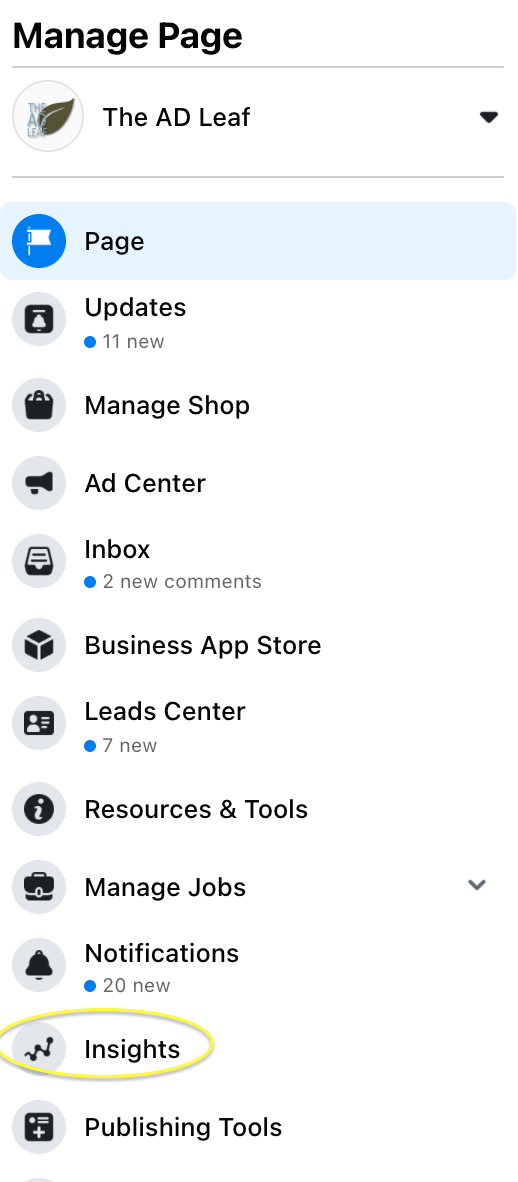
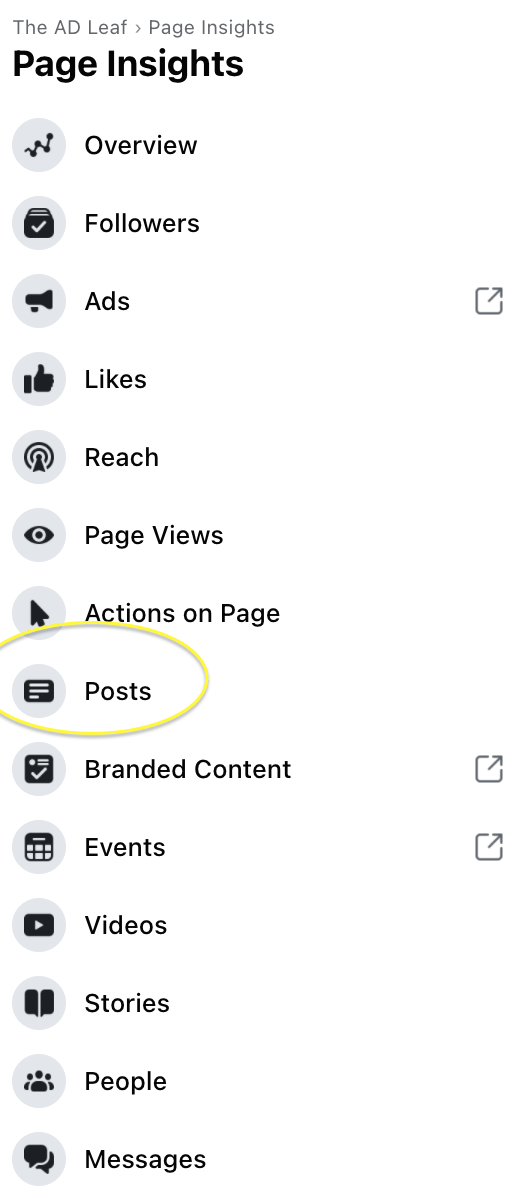
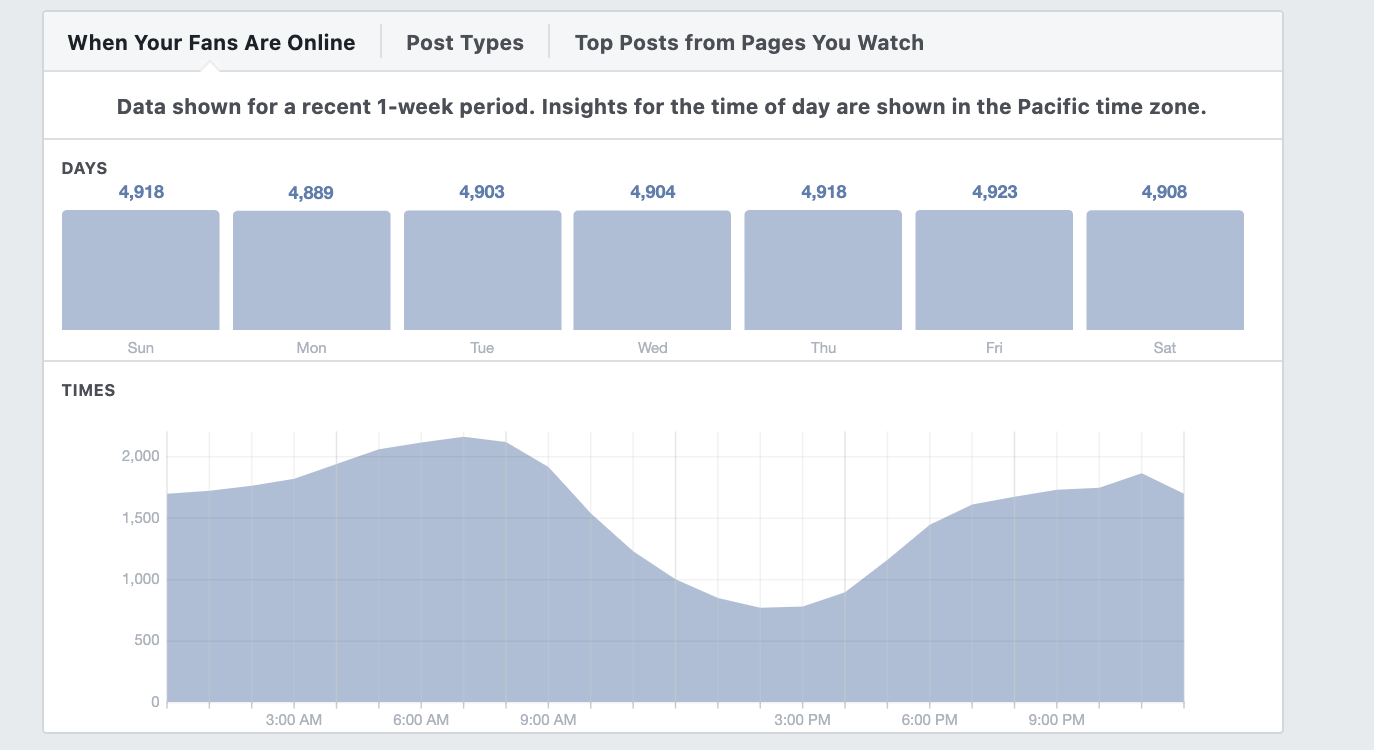
Facebook makes it relatively easy to figure this out. When looking at your Facebook Page, you’ll see a list of options on the left-hand side. First, you’ll select the option titled “Insights.” From there, you’ll select “Posts.” Then, you’ll see a graph at the top of the page detailing when your audience is most active. For those that are visual learners, here’s a step-by-step:

Based on the data provided above, we can see a few key points:

  • Our audience is most active on Sundays, Thursdays, and Fridays.
  • Our audience is most active between the times of 5 a.m. and 8 a.m.
  • Our audience is also reasonably active between the times of 9 p.m. and 11 p.m. 

After looking at this data, we should optimize our content to launch between 5 a.m. and 8 a.m. throughout the week. If we wanted to switch things up, we could also launch our content between 9 p.m. and 11 p.m. This will help our campaign connect with most of our audience as it may be different target audiences who are active in the evening hours versus the engaged audience in the morning hours.

Instagram

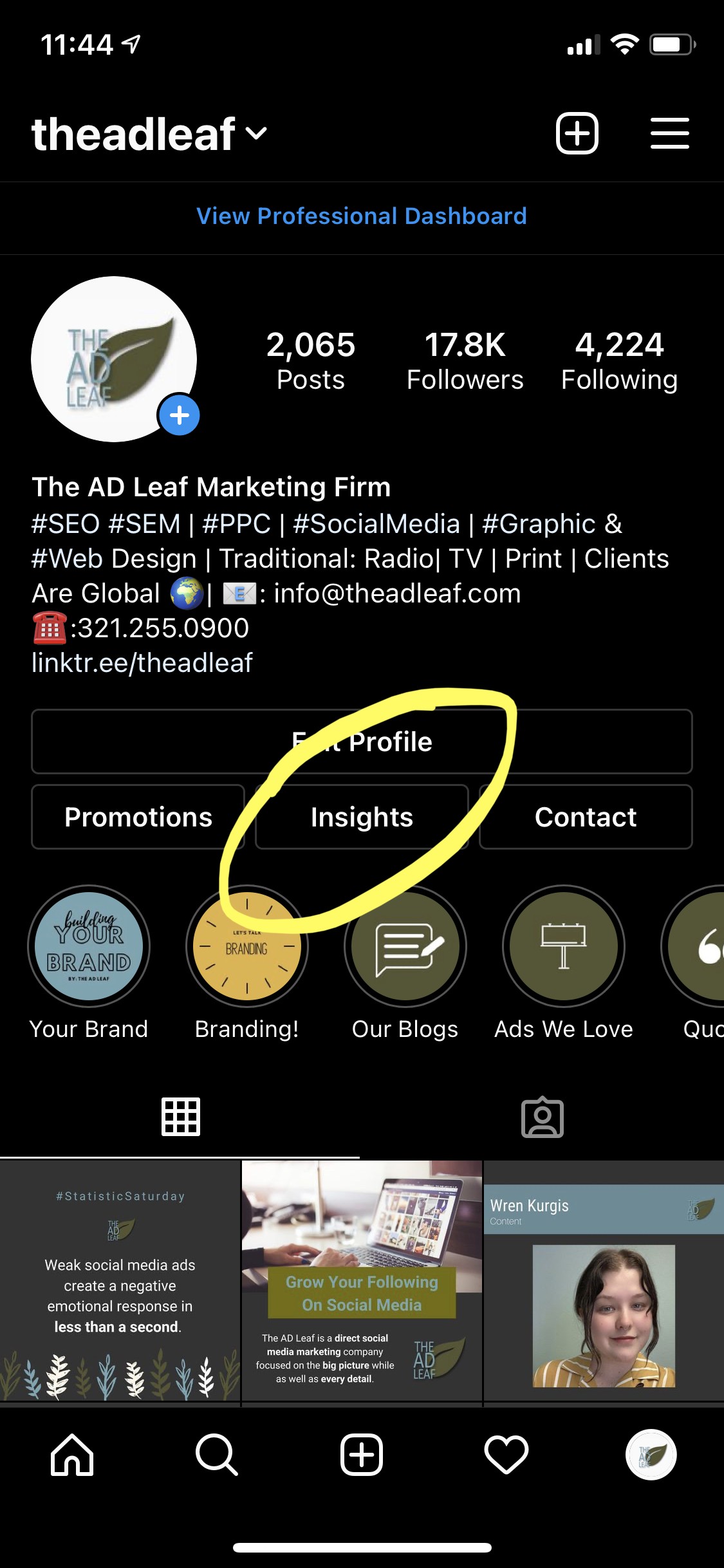
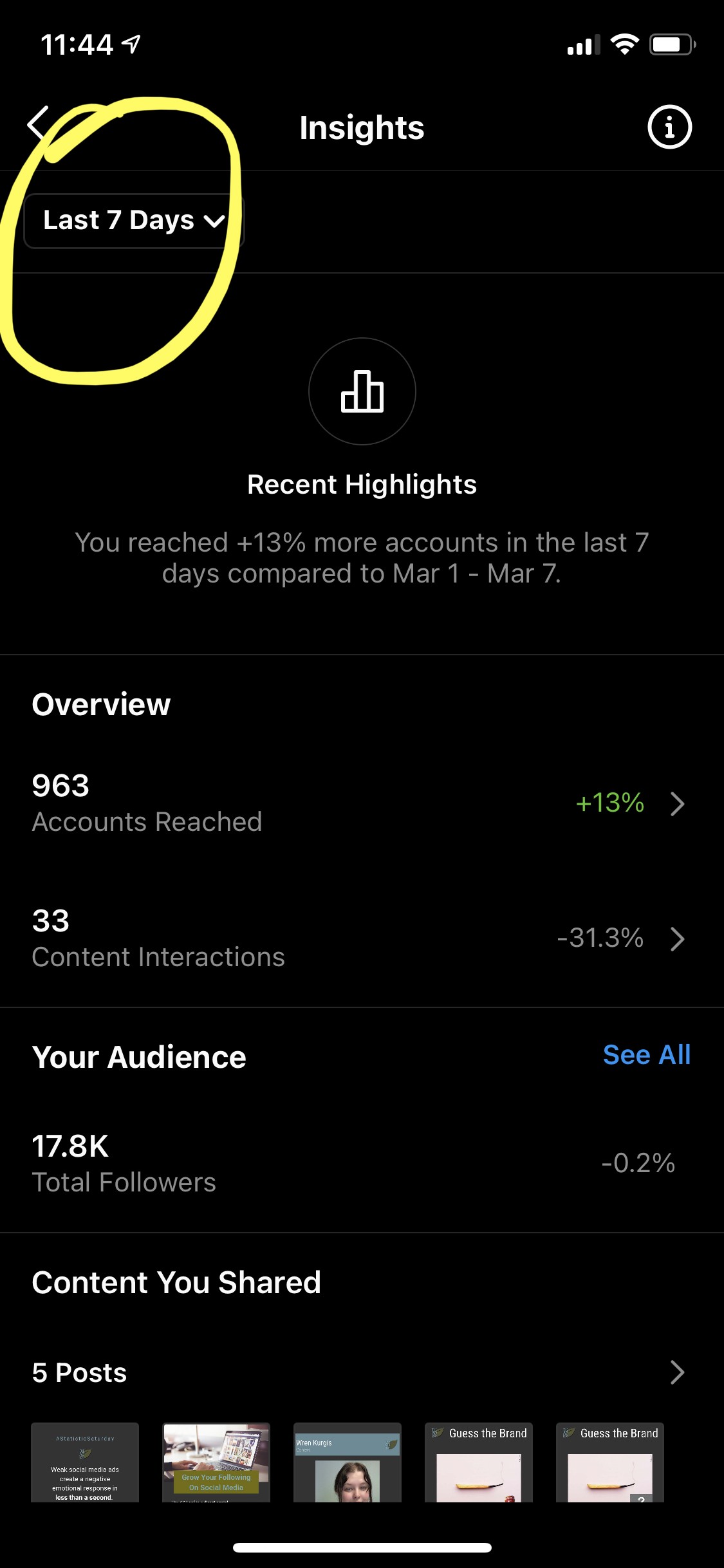
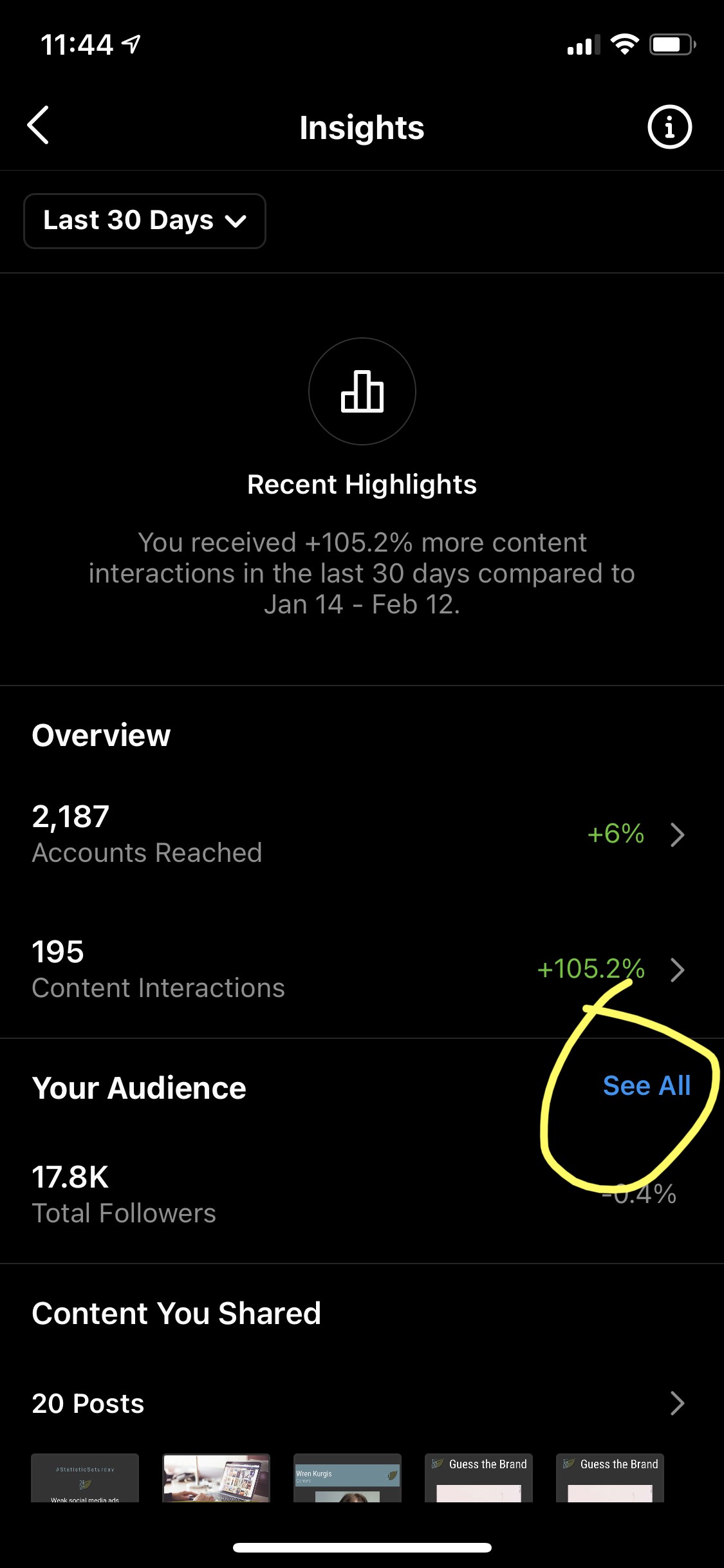
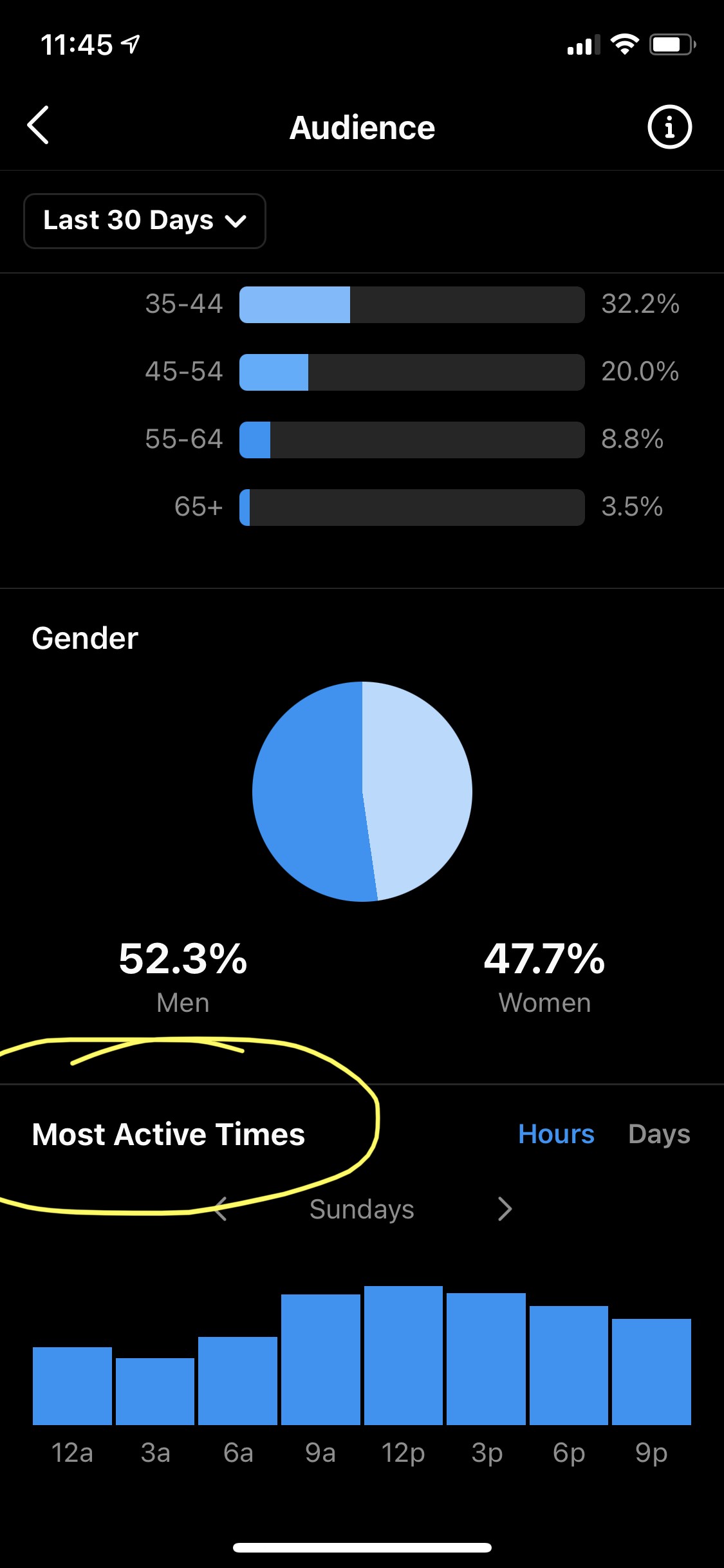
When looking at your Instagram profile’s main screen (hint: make sure your profile is converted to a Business Profile), click on the “Insights” button. From there, ensure you’re looking at a 30-day overview as 7-day analytics can provide a false positive or a false negative. The more data you’re taking into consideration, the better. Select “See All” next to the “Your Audience” section. Then, scroll down to the bottom, and you’ll be able to see the Hours or Days your audience is most active. Here’s a step-by-step breakdown for my visual learners:

In reviewing the analytics from our Instagram profile, here are a few key takeaways:

  • In terms of daily activity, our audience is pretty even across the board. There isn’t a specific day that stands out significantly. 
  • Our audience is most active between the hours of 12 p.m. – 3 p.m. across the board. 

When optimizing our Instagram content, it would serve us well to launch our content within that time frame each day. This will capture the bulk of our audience. In looking at the last graphic, it appears our audience is equally as active around 9 a.m. and 6 p.m. as well, so if we wanted to test our strategy against itself, we could choose one of those times to post as well. Like our Facebook strategy, it’s essential to consider multiple audience groups and determine which posting strategy captures your most active audience. 

This is just two out of the many social media platforms that exist now, so you can imagine it takes a significant amount of time and effort to track peak activity times across multiple platforms. As an agency, we have access to various tools that allow us to compile, track, and present this data to you, along with a comprehensive social media marketing strategy that takes all of this (and more) into consideration. If you’re looking to streamline your social media strategy, email us at info@theadleaf.com or call us at 321-255-0900 to get started with your unique social media strategy today. 

How Much Should Businesses Spend on Marketing in 2025?

How Much Should Businesses Spend on Marketing in 2025

One of the most common questions business owners ask is: “How much should I spend on marketing?” While there isn’t a one-size-fits-all answer, the truth is that a well-planned marketing budget is one of the most important investments your business can make. The right allocation ensures that your brand remains competitive, visible, and connected to customers in today’s fast-paced digital world.

In 2025, with increased competition, evolving consumer behavior, and the emergence of new digital platforms, determining how much to invest in marketing requires more strategic planning than ever before. This blog will explore how businesses should approach their marketing budgets, key factors to consider, and why an intentional strategy is the key to long-term growth.

Why Marketing Budgets Matter

Marketing is not just an expense; it’s an investment. Companies that fail to dedicate enough resources to marketing often find themselves invisible in a crowded marketplace. Whether you’re a startup or an established corporation, your ability to attract and retain customers depends heavily on your marketing efforts.

A study from the U.S. Small Business Administration suggests that businesses typically allocate 7% to 8% of their revenue to marketing, depending on their size and industry. Without this investment, it becomes nearly impossible to reach new audiences, communicate your value, and build a loyal customer base.

Click here and discover how our Marketing Services can help you make the most of your investment.

Factors That Influence Your Marketing Spend

Every business is unique, which means your marketing budget should reflect your specific goals and circumstances. Some of the most important factors include:

  1. Industry and Competition

    • Highly competitive industries such as retail, e-commerce, or healthcare often require higher investments to stand out.

    • Niche industries may spend less but focus more on specialized channels.

  2. Business Size and Revenue

    • Larger companies with higher revenue can allocate larger budgets.

    • Small and medium-sized businesses may start smaller, but should still maintain consistency.

  3. Business Goals

    • Are you looking to increase brand awareness, generate leads, or expand into new markets? Your objectives will directly impact your spending.

  4. Target Audience

    • Understanding where your customers spend their time—social media, search engines, local directories- will help you allocate money effectively.

  5. Type of Marketing

    • Traditional methods (TV, radio, print) can be expensive but have a broad reach.

    • Digital methods (social media, PPC, SEO, and content marketing) are more cost-efficient and measurable.

Balancing Digital and Traditional Marketing

In 2025, digital marketing remains dominant, but traditional advertising still has its place. For most businesses, the key is finding the right balance.

  • Digital Marketing: Offers measurable ROI, lower costs, and precise targeting. Strategies such as social media advertising, email marketing, and SEO enable businesses to reach their target audiences directly and track performance in real-time.

  • Traditional Marketing: Effective for establishing brand credibility and achieving mass reach (for example, billboard ads or local radio for community-based businesses).

The smartest approach is to prioritize digital while integrating select traditional methods when they make sense for your audience.

How Much to Spend: General Guidelines

While budgets vary, here are some benchmarks businesses often follow:

  • New Businesses: Should allocate 12%–20% of revenue to marketing to build brand recognition quickly.

  • Established Businesses: Typically spend 6%–12% of revenue to maintain and grow their customer base.

  • Aggressive Growth Goals: If you’re trying to expand into new markets or launch a new product, expect to increase your budget beyond the averages.

According to Gartner’s Annual CMO Spend Survey, marketing budgets represented an average of 9.1% of company revenue in 2024, indicating that businesses are prioritizing growth despite economic shifts.

Gartner CMO Spend Survey.

The Importance of ROI and Flexibility

It’s not enough to simply set aside money for marketing; you also need to track the return on investment (ROI). With tools like Google Analytics, Meta Ads Manager, and CRM software, businesses can track the performance of every dollar.

Flexibility is also essential. Marketing is not static, and trends change quickly. A campaign that worked last year may not be effective today. Businesses should continuously review performance and reallocate budgets to the channels delivering the best results.

Avoiding Common Mistakes in Marketing Budgets

Many businesses struggle with their marketing investments because they fall into these traps:

  • Spending too little: Hoping to save money by underinvesting often results in wasted time and minimal impact.

  • Spreading too thin: Trying to be on every platform without a strategy can dilute your message.

  • Focusing only on short-term results: While immediate sales are important, marketing also builds long-term brand equity.

By avoiding these mistakes, you ensure that your budget supports both present goals and future growth.

Why The AD Leaf

Determining how much to spend on marketing can feel overwhelming—but you don’t have to figure it out alone. At The AD Leaf, we work with businesses of all sizes to create customized strategies that align with your budget, industry, and goals.

Our team specializes in maximizing ROI by focusing on the channels that matter most for your business, whether that’s digital advertising, content marketing, SEO, or traditional outreach. With our expertise, you can feel confident that every dollar is working toward building awareness, attracting customers, and driving measurable results.

If you’re ready to take control of your marketing budget and invest in growth, contact The AD Leaf today and let’s design a strategy that works for you.

e-commerce basics

The Basics of E-Commerce

Learn E-Commerce Basics

If you have ordered something off Amazon or another online shopping platform, you have engaged in e-commerce. This practice has seen substantial growth over the past year, as more people can purchase their essential goods from websites or mobile apps. If you are a business owner who sells a specific product, then starting an e-commerce platform could be a massive boost for your company. We’ll help you get started with these e-commerce basics.

E-Commerce is Growing

Due to the COVID-19 pandemic, many people went online to shop and pay for the items they wanted and needed. This caused 21.3% of all retail sales to be from online shopping. There were several additional reasons for this growth, including broader accessibility and faster service on e-commerce websites.

These online shopping experiences fall under B2C transactions. B2C or Business to Consumer transactions is when customers buy a product directly from a company. These businesses use their websites as a virtual storefront, showcasing products that customers either need or want. You can do this as well with your own business and products!

The Basics of E-Commerce and More

At The AD Leaf ® Marketing Firm LLC., we understand that starting your e-commerce store can be a bit overwhelming. There are many products that you have to load information of online, and the market of e-commerce platforms themselves continuing to grow. You might be wondering where to start, and our team of marketing experts is here to help. 

List of E-Commerce Websites

When it comes to e-commerce basics, there’s nothing more important than your website. Many general website builders, such as WordPress and Wix, can give you the option to add an online store to an already-existing website. However, some platforms allow you to make your store the focal point of the company’s website. Here are just a few:

  • Shopify
  • BigCommerce
  • WooCommerce
  • Square Online

Designing Your Website

The primary purpose of your e-commerce site is to attract new customers and bring back previous ones. That means that you should make sure that it is as accessible as possible. Some of the best ways to do this are choosing simple layout designs and easy-to-read text with your company’s colors. 

Leave It To Us

Although you might be excited to begin working on your e-commerce website, you might be wondering when you can take time out of your busy day to work on it. If you are in this situation, don’t panic because The AD Leaf ® Marketing Firm LLC.’s team of web designers and marketers can help. We can make your new website from scratch, ensuring that you and your store are represented in the best way possible.

Ready for a free consultation to see how we can help bring your business online? Call us today at 321-255-0900.

Remarketing In {{lpg_city}} {{lpg_state}}

What Is Bounce Rate?

Bounce rate is one of the most important factors when it comes to your SEO. But what exactly is it? How can I improve my bounce rate? What are the average rates? These are questions you probably have regarding bounce rate. So, what is it?

Defining Bounce Rate

The term “bounce rate” is a marketing term that represents how many of your site visitors are coming to your website then bouncing or leaving it without going to other pages. The higher your bounce rate is on your website the worse that is for you, it not only could affect your SEO but it means something is in disarray on your site itself. But before we determine what a good or bad bounce rate is let’s first determine what the average bounce rates are for different industries. Your niche plays a big role in what your rate is, as an example of that, say someone has a very specific question about your niche. They would go to that page and then have their question answered and leave the site. If you are wondering what your average industry bounce rate is, refer to the infographic below.

What is bounce rate?

How Do You Improve Your Bounce Rate?

The best way for you to improve your bounce rate is to first find out where everyone is leaving and then try and determine what could be the cause of it. For example, if you notice a lot of people are leaving within a few seconds of being on your website that could be due to many different factors from loading speeds, to the visuals of the site itself, being ranked for misleading keywords (they can’t find what they are looking for), wrong or misinformation, etc. One of the best ways to determine your bounce rate is to put yourself into the mindset of incoming new visitors. What would you want to see for your niche? What questions are you asking as a new visitor that you answer? Is there enough information? One of the best ways to capture a new visitor is with visuals like pictures, infographics, or videos. Anything you can do to capture their attention is a great way to make sure their eyes stay on it.

Attracting The Right Visitors

Traffic as a whole can be amazing, but not if everyone is leaving as soon as they arrive. Ensuring you have a good rate means that your content is not just getting in front of eyes, it’s getting in front of the RIGHT eyes. To do that when it comes to targeting keywords and rankings you need to envision yourself as the person coming in. If I was looking for “Tile Roofing” and only tile roofing and someone ranking for “tile roofing” only did metal roofs, I would have no reason to stay on that website. One of the best things you can do to optimize your rate is to make sure you have high-quality content that makes people stay. If you have any more questions or want to discuss how we can help your rate improve visit our contact page!