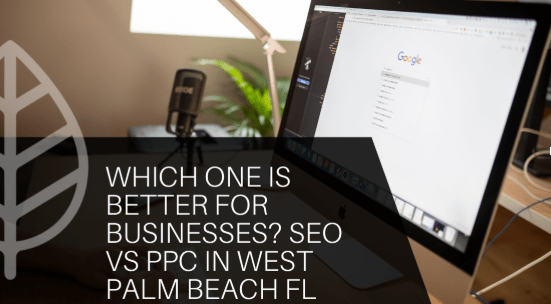
SEO vs. PPC in West Palm Beach: Finding the Right Digital Marketing Strategy for Your Business

Every business owner wants more qualified leads, but deciding how to invest your marketing budget isn’t always straightforward. Should you focus on improving your search rankings through SEO, or should you launch paid advertising campaigns that generate traffic immediately?

At The AD Leaf West Palm Beach, we help businesses answer that question every day. While SEO and PPC each offer distinct advantages, the strongest results often come from combining both into a comprehensive marketing strategy. Whether your goal is increasing website traffic, generating leads, or building long-term brand awareness, understanding how these two approaches work together can help you make smarter marketing decisions.

Our team creates customized campaigns that combine SEO services West Palm Beach, PPC advertising West Palm Beach, and comprehensive digital marketing West Palm Beach solutions to help businesses throughout Florida grow with confidence.

Looking for a marketing strategy built around your business goals? Contact The AD Leaf West Palm Beach today to schedule a consultation.

SEO: Building Long-Term Online Visibility

Search Engine Optimization is the process of improving your website so it ranks higher in organic search results. Instead of paying for every click, SEO focuses on making your website more valuable to both search engines and potential customers.

Our SEO services in West Palm Beach include technical optimization, content development, keyword research, local SEO improvements, and ongoing performance analysis. Together, these efforts help your website become more visible when customers search for products or services like yours.

Research from BrightEdge shows that 53% of all trackable website traffic comes from organic search, highlighting the importance of SEO as a long-term marketing investment.

Businesses that consistently invest in digital marketing in West Palm Beach often discover that strong SEO continues generating qualified traffic long after the initial optimization work is complete.

Want to strengthen your website’s content? Read our guide on SEO Content Strategy.

Why SEO Continues to Deliver Results

Businesses choose SEO because it provides lasting value.

Some of the biggest benefits include:

  • Improved rankings in Google search results.
  • Greater credibility with potential customers.
  • Consistent organic website traffic.
  • Better support for long-term digital marketing goals in West Palm Beach.
  • Increased visibility through effective SEM strategies in West Palm Beach.

SEO requires time, but businesses willing to invest consistently often see stronger returns as their websites gain authority and trust.

PPC: Driving Immediate Traffic

Unlike SEO, Pay-Per-Click advertising gives businesses immediate visibility on search engines. With PPC advertising in West Palm Beach, your business can appear at the top of search results within hours of launching a campaign.

Paid advertising gives you complete control over your audience, budget, and messaging. You can target customers based on keywords, geographic location, demographics, and even the time of day they search.

Many businesses also use PPC advertising in West Palm Beach to test promotions, landing pages, and advertising copy before applying those insights to their broader marketing strategy.

When combined with strong SEM strategies in West Palm Beach, PPC becomes an effective tool for generating fast results while supporting future SEO efforts.


Benefits of PPC Advertising

Businesses appreciate PPC because it offers:

  • Immediate search engine visibility.
  • Highly targeted customer reach.
  • Flexible advertising budgets.
  • Measurable campaign performance.
  • Quick adjustments based on real-time data.

The downside is that paid traffic ends when advertising stops. That’s why many successful businesses combine PPC advertising West Palm Beach with SEO services West Palm Beach to create both immediate and long-term growth.

Which Strategy Makes More Sense?

The right answer depends on your business goals.

If you’re introducing a new product, promoting an event, or trying to generate leads quickly, PPC can produce results almost immediately.

If you’re focused on building long-term authority and reducing your dependence on paid advertising, SEO offers exceptional value over time.

Rather than choosing one over the other, we recommend building a balanced marketing strategy that includes both. SEO services West Palm Beach help establish credibility while PPC advertising West Palm Beach generates immediate visibility for high-value searches.

Together, these tactics create stronger SEM strategies in West Palm Beach that improve your presence across multiple search results.

Planning promotions around busy seasons? Learn how to prepare with our article about developing a holiday marketing strategy.

Why SEO and PPC Work Better Together

The most successful businesses don’t rely on a single source of website traffic.

Combining SEO services West Palm Beach with PPC advertising West Palm Beach allows you to attract customers today while building authority for tomorrow. Paid campaigns provide immediate data about customer behavior, while SEO creates lasting content that continues generating traffic over time.

Together, they strengthen your overall digital marketing West Palm Beach strategy by helping your business appear in multiple places throughout the search results.

This integrated approach also improves online advertising Florida efforts by creating more opportunities for potential customers to discover your business at different stages of the buying process.

Why The AD Leaf West Palm Beach

At The AD Leaf West Palm Beach, we understand that every business has different goals, audiences, and challenges. That’s why we build customized marketing strategies instead of offering one-size-fits-all solutions.

Whether you’re interested in SEO services West Palm Beach, PPC advertising West Palm Beach, or a complete digital marketing West Palm Beach campaign, our team develops data-driven solutions designed to increase visibility, generate qualified leads, and produce measurable results.

By combining proven SEM strategies in West Palm Beach with effective online advertising Florida campaigns, we help businesses create sustainable growth that continues long after individual campaigns launch.

Ready to grow your business online? Contact The AD Leaf West Palm Beach today and let our team build a marketing strategy tailored to your success.
 

AI Predictive Analytics for Smarter Marketing Decisions

Artificial intelligence is transforming the way businesses understand and connect with their audiences. Instead of reacting to customer actions after they happen, companies can now predict future behavior and deliver more personalized experiences.

A well-planned AI Marketing Strategy helps organizations analyze customer data, identify buying patterns, and create campaigns that reach the right audience at the right time. By combining predictive analytics with digital marketing, businesses can improve customer satisfaction, strengthen brand loyalty, and increase conversions.

As online competition continues to grow, using AI is becoming essential for building smarter marketing campaigns and making informed business decisions.

Understanding an AI Marketing Strategy

An AI Marketing Strategy is the process of using artificial intelligence to improve marketing efforts through automation, predictive analytics, and data-driven decision-making. AI can quickly process large amounts of information from websites, customer relationship management (CRM) systems, email campaigns, and social media platforms to uncover valuable insights.

Rather than relying on assumptions, marketers can use AI to understand customer behavior and identify trends that help guide future campaigns. Businesses that begin with a strong content marketing strategy create a foundation for AI to deliver even better results by providing useful, relevant content that addresses customer needs.

Predictive Analytics Helps Businesses Stay Ahead

One of the biggest advantages of AI is its predictive analytics capabilities. This technology examines historical and real-time data to forecast future customer actions. Instead of waiting for customers to make decisions, businesses can anticipate what they are likely to need next.

Predictive analytics can help organizations:

  • Identify customers who are likely to make another purchase.
  • Detect visitors who may leave a website without converting.
  • Recommend products based on previous buying habits.
  • Recognize seasonal trends before demand increases.
  • Improve audience targeting for future campaigns.

These insights enable businesses to make proactive marketing decisions rather than react after opportunities have passed.

Improving SEO with Artificial Intelligence

Search engine optimization is no longer just about adding keywords to a webpage. Modern SEO focuses on providing valuable content that satisfies user intent, and AI can help marketers better understand what their audiences are searching for.

Artificial intelligence can identify content gaps, analyze competitors, discover trending topics, and recommend new keyword opportunities. It also helps marketers organize content into topic clusters that improve website structure and user experience.

An effective SEO content strategy supported by AI enables businesses to create content that answers customer questions while improving visibility in search engine results.

Creating Personalized Customer Experiences

Consumers are more likely to engage with brands that provide relevant and personalized experiences. AI makes personalization possible by analyzing customer behavior across multiple channels.

Some of the information AI evaluates includes:

  • Purchase history
  • Website browsing activity
  • Search behavior
  • Geographic location
  • Device preferences
  • Customer interests
  • Previous interactions with the business

Using these insights, companies can recommend products, personalize website content, customize email campaigns, and display targeted advertisements that are more likely to generate results.

Personalized marketing not only improves engagement but also strengthens trust between businesses and their customers.

Smarter Marketing Automation

Marketing automation has become increasingly powerful with the addition of artificial intelligence. Instead of following fixed schedules, AI-powered automation responds to customer actions in real time.

Businesses can automate processes such as:

  • Welcome email sequences
  • Product recommendations
  • Abandoned cart reminders
  • Follow-up messages after purchases
  • Customer re-engagement campaigns
  • Educational email series

These automated workflows save time while ensuring customers receive relevant information throughout their buying journey. Marketing teams can then spend more time developing creative strategies while AI manages repetitive tasks behind the scenes.

Bringing SEO and Social Media Together

Successful digital marketing involves more than optimizing a website. Customers interact with businesses through search engines, social media platforms, online reviews, and other digital channels.

Artificial intelligence helps marketers understand how users move between these channels and which interactions influence purchasing decisions. These insights allow businesses to create more consistent messaging across their entire marketing strategy.

Companies looking to strengthen their online presence can learn more about the ways social media and SEO strategy work together. Combining AI with SEO and social media creates a more connected customer experience while improving visibility across multiple platforms.

Best Practices for Building an AI Marketing Strategy

Businesses should approach AI with a clear plan rather than adopting new technology without defined goals. A successful AI Marketing Strategy starts with quality data and measurable objectives.

Some best practices include:

  • Define clear marketing goals.
  • Collect accurate customer data.
  • Regularly monitor campaign performance.
  • Test and optimize marketing content.
  • Continue updating SEO content.
  • Combine AI insights with human creativity.

Artificial intelligence is most effective when it supports experienced marketers instead of replacing them. Human expertise remains essential for understanding customer emotions, developing creative campaigns, and building lasting relationships.

Why The AD Leaf West Palm

Artificial intelligence will continue to shape the future of digital marketing as technology advances. Businesses that invest in an AI Marketing Strategy today will be better prepared to adapt to changing customer expectations, evolving search algorithms, and new marketing opportunities.

By using predictive analytics to understand customer behavior, improving SEO through valuable content, and creating personalized experiences across multiple channels, organizations can build stronger relationships while increasing long-term business growth. Companies that embrace AI now will be well positioned to remain competitive and deliver exceptional customer experiences for years to come.

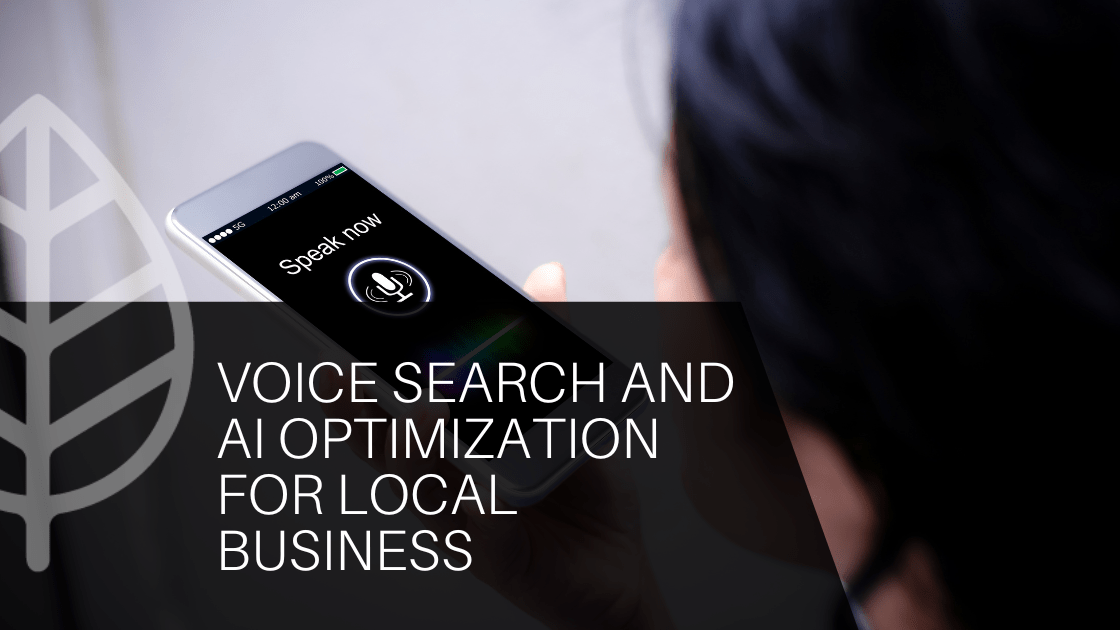
Voice Search And AI Optimization For Local Business

Think about how many times a day you find yourself reaching for your phone to look up something. Whether it be directions, restaurant recommendations, or fact-checking something you saw on Instagram, you probably use your phone for search more than you realize. As of 2026, over half of all internet traffic comes from mobile devices, according to Consumer Affairs. 

This is great news for businesses because they can connect with consumers wherever they go and whatever they are doing. No longer do you need a place with wifi to sit down with your computer if you want to look something up online. Features like data and voice search make it easy for users to search while on the go. 

Half of mobile users in the U.S. use voice search daily, and much of this traffic comes from AI assistants like Siri. 

Optimizing for voice search is becoming increasingly important for getting your business in front of users, especially as search becomes increasingly reliant on AI.


Voice Search SEO Can Connect Local Businesses With High-Intent Consumers

Imagine two users searching for restaurants in their area: one is searching on their laptop at home, and the other is using voice search while driving around town. Which one do you think is likely to commit to going to a restaurant first? Probably the one on the road.

Users often use voice search when they want an immediate, highly relevant answer. These users are high-intent and ready to convert, making them an incredibly valuable group to target.

The same factors that make these users ready to convert are also why a strong voice search SEO strategy is so important. Busy, multitasking users are likely to choose the first relevant answer they receive from their AI assistant. If you are not among the first few suggestions, you are not being considered.

But if you can get in those first few suggestions, you can unlock an audience of consumers ready to convert. 


Voice Search is Changing eCommerce

Voice search is impacting more than businesses with physical stores or local service providers; it is also changing how consumers shop online. 

In 2024, 22% of consumers were using voice search to make direct purchases through their AI assistants. That number has likely increased as AI has increasingly embedded itself in the consumer decision-making process. 

Consumers are using AI assistants to guide their purchasing decisions, largely interacting with them via voice search. Appearing in these search results will become increasingly critical for e-commerce businesses to connect with and attract consumers.


How to Optimize for Voice Search and AI Assistants

In many ways, the old rules of SEO still apply, especially as AI often scrapes top search results for information. Authority, relevance, and trustworthiness are important for appearing in both traditional search results and voice search results. 

For example, if someone does a voice search for a particular service and your business has an average rating of 3 stars out of 5, there is a good chance it will not appear on the first page. 

The main difference between traditional search and voice search lies in how users phrase their queries. Voice search queries tend to be more conversational and more clearly phrased as questions. This aligns with the trend we are seeing in AI searches, where queries are longer, more specific, and more natural-sounding than traditional searches. 

Adapting your SEO strategy for these longer, more conversational queries is critical for keeping up with changing search behavior. 

Working with a marketing company like the Ad Leaf that specializes in AI-friendly SEO strategies can help bring your website out of 2015 and into this new era of AI search. 


It Can Help With A Local Business Website Structure & Content Marketing

When a business has a website and is looking to build a content marketing strategy for voice search SEO, it should imagine being in the customer’s position. What questions might they ask?

When marketing, it is important to consider the consumer journey. At which point in the journey does the consumer see your marketing, and how can we move them further along that journey?

You want your content to guide the consumer toward a purchase decision. If they are using voice search SEO, you need to be the business that can answer all their questions and objections about why they need your products and services.

High-quality, relevant content optimized for voice search can help you, as a local business, be found on the first page of Google.


Appear in Voice Searches With The AD Leaf

The AD Leaf’s SEO and Content Marketing teams stay on top of evolving SEO trends and user search behavior, so that even in a shifting search landscape, your website reaches consumers.


Start ranking in voice searches with The AD Leaf West Palm


Creating an Intelligent Marketing Ecosystem: Integrating AI Virtual Assistants for Seamless User Experience

Creating an Intelligent Marketing Ecosystem: Integrating AI Virtual Assistants for Seamless User Experience

In the modern digital landscape, the “funnel” is no longer a linear path; it is an atmosphere. At The AD Leaf Marketing Firm, we describe the pinnacle of modern strategy as an intelligent marketing ecosystem.

This is a self-sustaining environment where every digital touchpoint, from social media to your website, works in tandem to nurture a lead. At the heart of this evolution is the strategic integration of AI virtual assistants in marketing. Gone are the days when a chatbot was a simple, “if-then” script that frustrated users more than it helped.

Today, AI virtual assistants in marketing represent a sophisticated layer of artificial intelligence capable of natural language processing (NLP) and predictive behavior. For businesses looking to scale, these assistants are not just “add-ons”; they are the connective tissue that ensures a seamless customer interaction at any hour of the day.


The Shift Toward an Intelligent Marketing Ecosystem

An intelligent marketing ecosystem is defined by its ability to learn and adapt. Traditional marketing is reactive: you run an ad and wait for a click. In contrast, an AI-powered marketing ecosystem is proactive. When a user lands on your site after reading about the benefits of hiring an agency for your marketing, the AI assistant already understands the context of their visit.

By using marketing automation tools, we can map the user’s journey in real time. If the user stops on a service page for more than thirty seconds, the AI assistant can offer a case study or a consultation link. This isn’t just automation; it’s an enhancement of user experience that feels personal rather than programmed.


Enhancing User Experience Through AI

User experience (UX) is the ultimate currency of the web. Google’s latest algorithm updates place heavy emphasis on how users interact with your content. AI virtual assistants in marketing play a pivotal role here by providing immediate gratification.

Consider this: According to a study by Juniper Research, AI-powered chatbots and virtual assistants are projected to drive over $112 billion in retail sales by 2023. This staggering figure highlights that consumers aren’t just “okay” with AI; they are actively using it to make purchasing decisions. When you integrate AI virtual assistants into marketing, you remove the friction that often leads to cart abandonment or bounced sessions.


Seamless Customer Interaction and Voice Search

The rise of AI is intrinsically linked to how we search. As we have noted in our deep dive into voice search SEO for local businesses, more users are “talking” to the internet than ever before. AI virtual assistants in marketing bridge the gap between voice queries and website conversions.

When a user asks their phone, “Who is the best digital agency in Melbourne?” and lands on our site, our internal AI virtual marketing assistants can maintain that conversational tone. This creates a seamless customer interaction that mirrors a human conversation, which is critical for building trust in the high-stakes world of B2B and high-ticket B2C services.


Marketing Automation Tools: The Engine Room

To build a truly intelligent marketing ecosystem, you must look beyond the front-end chat bubble. The real power of AI virtual assistants in marketing lies in their integration with your CRM and marketing automation tools.

Every interaction a user has with an AI assistant provides data. This data should automatically flow into your content strategy. If your assistant reports that 40% of users are asking about “SEO pricing,” you know exactly how to enhance your content marketing strategy to address those specific pain points.


Why The AD Leaf?

At The AD Leaf Marketing Firm, we don’t just implement tools; we engineer results. Creating an intelligent marketing ecosystem requires a deep understanding of how AI virtual assistants in marketing interact with human psychology and search engine algorithms.

Our team specializes in moving the needle for our clients by ensuring that every seamless customer interaction is backed by data-driven logic and creative excellence. We provide the “Human Element” that directs the AI, ensuring your brand remains authentic while becoming hyper-efficient.

How to Make Your Photos Pop for Social Media Marketing

In West Palm, businesses compete in a visually driven market where first impressions matter. Whether customers discover a company through Instagram, Facebook, LinkedIn, or Google, visuals often determine whether they continue engaging or move on. Brands with weak content and messaging struggle to attract attention, while companies using strong social media photography and strategic branding create lasting connections.

At The AD Leaf, our West Palm team works with businesses to build high-quality, consistent content that improves audience targeting and strengthens online visibility. By combining content writing, graphic design, marketing, and social media strategy, we help businesses create eye-catching images that encourage stronger social media engagement.

Standing out online requires more than posting random content. Every visual should support a clear brand message and speak directly to the intended audience.

If your digital presence feels inconsistent or underperforming, now is the time to improve your visual strategy and strengthen your messaging.


FRAMING AND COMPOSITION

Social Media MarketingThe “rule of thirds” is a rule of thumb in the composition of visual images such as photography, graphic designs and painting.  It can be applied to any subject to improve the composition and balance of your images to make your design more engaging. The rule of thirds involves mentally dividing up your image using 2 horizontal lines and 2 vertical lines. You then position the important elements in your scene along those lines, or at the points where they intersect.  You want to use the rule of thirds, both horizontally and vertically by placing  your subject in the right or left third of the photo–this stimulates the viewer to spend more time looking at your photo.  The idea is that an off-center composition is more pleasing to the eye and looks more natural than one where the subject is placed right in the middle of the frame. It also encourages you to make creative use of negative space, the empty areas around your subject.

If your photo is of a landscape, avoid putting the horizon line in the middle of the photo because this tends to make the photo feel like it’s split in two.  Instead, place the horizon line along one of the horizontal lines of thirds. Make sure any focal point of the picture is placed at one of the points where the horizontal and vertical lines meet to serve as an “anchor” for the image.

If your picture is of a person, remember that the eyes are where we are naturally drawn to, so put the eyes level with one of the horizontal lines of thirds or at one of the points where the horizontal and vertical lines intersect to make a much more interesting photo and not a “mug shot” (where the subject is centered in the middle of the frame).


Why Strong Visual Content Matters

Consumers interact with visual content constantly throughout the day. Businesses using outdated photos, inconsistent branding, or low-quality graphics often lose credibility before potential customers even read the message.

According to HubSpot, content with relevant visuals receives 94 percent more views than content without imagery. That statistic reinforces the importance of social media photography and visual marketing strategies for businesses trying to grow in competitive areas like West Palm.

Professional visuals help businesses communicate trust, professionalism, and quality immediately. Strong content writing supports these visuals by creating clear messaging that aligns with the brand voice.

At The AD Leaf, we help businesses in West Palm create eye-catching images that connect with local audiences while strengthening social media engagement across multiple platforms.

Simple photo enhancement tips can also make a major difference. Improving image brightness, refining composition, adjusting contrast, and maintaining consistent editing styles all contribute to stronger branding and more effective visual communication.

Reaching the Right Audience With Better Visual Marketing Strategies

Many businesses struggle because their content does not connect with the right audience. Weak content and messaging often come from inconsistent visuals and unclear branding.

Audiences expect polished and professional digital experiences. Social media photography should reflect the quality and personality of the brand while supporting a targeted marketing strategy.

Strong visual marketing strategies help businesses create content that feels intentional rather than random. When combined with effective content writing, businesses can guide viewers toward meaningful action instead of passive scrolling.

Eye-catching images capture attention, but consistent branding keeps audiences engaged. Businesses that use coordinated visuals and messaging often see higher social media engagement because their content feels recognizable and trustworthy.

We also encourage businesses to focus on practical photo enhancement tips that improve content quality without requiring extensive production budgets. Small visual improvements often create major differences in audience perception.

Creating High-Quality, Consistent Content Across Platforms

One of the biggest mistakes businesses make is posting inconsistent content. Different styles, mixed messaging, and irregular posting schedules weaken brand identity and reduce social media engagement over time.

High-quality, consistent content helps businesses establish familiarity with their audience. When customers recognize a company’s style immediately, trust develops more naturally.

Social media photography should follow a cohesive visual direction that aligns with the brand identity. Consistency in editing, composition, and messaging creates stronger recognition across every platform.

Photo enhancement tips also support consistency by helping businesses maintain a polished appearance throughout campaigns. Clean editing and professional presentation help transform ordinary visuals into eye-catching images that attract attention.

Content writing must also remain aligned with the visual direction. Clear messaging paired with strong visuals creates better communication and improves audience targeting.

Businesses that prioritize visual marketing strategies often create stronger long-term results because their branding remains recognizable and professional across all digital channels.

Turning Social Media Photography Into a Business Asset

Social media photography should do more than fill a content calendar. Every image should support a business objective, whether that goal is awareness, engagement, lead generation, or conversions.

Businesses benefit from strategic visuals that reflect the local lifestyle and customer expectations. Strong imagery paired with focused content writing creates a more compelling digital experience.

Visual marketing strategies help businesses organize content intentionally instead of posting without direction. This creates stronger social media engagement and helps businesses build a more professional online presence.

Eye-catching images also encourage audiences to spend more time interacting with content. Combined with consistent branding and messaging, this creates stronger recognition and improved performance over time.

We also recommend reviewing analytics regularly to determine which types of social media photography generate the strongest engagement. Data-driven adjustments help businesses improve future campaigns and refine their audience targeting strategies.

Building Better Messaging Through Design and Strategy

Graphic design, content writing, marketing, and social media should always work together. When these areas operate separately, businesses often create disconnected campaigns that confuse audiences.

Strong visual marketing strategies align every creative element under one clear direction. Businesses that maintain visual consistency and clear messaging often outperform competitors with scattered branding.

Photo enhancement tips help businesses refine visuals so every post reflects professionalism and quality. Strong social media photography reinforces trust and creates more memorable brand experiences.

Social media engagement increases when businesses communicate clearly and consistently. Audiences respond more positively to brands that appear organized, polished, and intentional.

Why The AD Leaf

At The AD Leaf, our West Palm team helps businesses transform weak content and messaging into strategic marketing systems built for long-term growth. We combine content writing, graphic design, marketing, and social media expertise to create campaigns that improve audience targeting and digital performance.

Through professional social media photography, proven photo enhancement tips, and focused visual marketing strategies, we create high-quality, consistent content that helps businesses produce eye-catching images and stronger social media engagement.

Stop guessing and start growing.

How AI Marketing Funnels Are Transforming Business Growth

How AI Marketing Funnels Are Transforming Business Growth

Modern businesses compete in an environment where customer attention is limited and digital competition grows every day. Traditional marketing methods no longer deliver the same results because customer expectations have changed. Buyers expect personalized experiences, fast responses, and content that feels relevant to their needs at every stage of the journey.

Artificial intelligence is helping businesses adapt by creating smarter and more efficient marketing systems. AI-powered marketing funnels help companies attract qualified leads, improve engagement, and guide customers through the buying process with greater precision.

At The AD Leaf West Palm, businesses can leverage advanced AI marketing strategies designed to improve performance, strengthen customer relationships, and support long-term growth.

Why Businesses Are Turning to AI Marketing Funnels

Digital marketing has become more competitive than ever. Businesses now manage multiple advertising platforms, customer touchpoints, and growing amounts of data. Without a clear strategy, marketing efforts often become inconsistent and inefficient.

Common challenges businesses face include:

  • Difficulty reaching the right audience
  • Low conversion rates from existing traffic
  • Time-consuming manual marketing tasks
  • Inconsistent customer engagement
  • Limited visibility into campaign performance

AI marketing funnels help solve these issues by using automation, predictive insights, and customer behavior analysis to improve decision-making and streamline marketing efforts.

The Benefits of AI in Modern Marketing Funnels

Smarter Audience Targeting

AI helps businesses analyze customer behaviors, interests, and interactions to create more accurate audience segments. This allows marketing campaigns to reach users who are more likely to engage and convert.

Personalized Customer Experiences

Consumers respond better to personalized communication. AI marketing funnels help businesses deliver relevant messaging, product recommendations, and offers based on customer preferences and actions.

Automated Marketing Processes

Marketing automation reduces repetitive tasks and improves efficiency. Businesses can automate:

  • Email sequences
  • Lead nurturing campaigns
  • Follow-up reminders
  • Customer onboarding
  • Retargeting efforts

Automation helps teams focus more on strategy and customer relationships rather than on manual workflows.

Real-Time Performance Insights

AI tools provide real-time analytics that help businesses monitor campaign performance, customer engagement, and conversion trends. These insights allow businesses to adjust strategies quickly for stronger results.

Key Components of an AI Marketing Funnel

Customer Data Collection

Strong marketing funnels begin with reliable data. AI systems gather information from websites, social media platforms, CRM systems, email campaigns, and paid advertising channels to create a clearer picture of customer behavior.

This data helps businesses make smarter marketing decisions while improving targeting and personalization.

Customer Journey Analysis

Understanding how customers move through the buying process is essential for improving conversions. AI marketing funnels identify important touchpoints that influence decisions and help businesses optimize each stage of the customer experience.

Marketing Automation Tools

Automation platforms improve consistency and speed across marketing campaigns. Businesses can use automation to send personalized communications, manage lead scoring, and improve follow-up timing.

Analytics and Funnel Optimization

AI continuously tracks marketing performance and identifies opportunities for improvement. Businesses can use these insights to refine campaigns, strengthen engagement, and increase return on investment.

How to Build an Effective AI Marketing Funnel

Step 1: Define Your Marketing Goals

Start by identifying what you want your marketing funnel to accomplish. Common objectives include:

  • Increasing lead generation
  • Improving customer retention
  • Boosting online sales
  • Enhancing customer engagement
  • Increasing appointment bookings

Clear goals help shape a more focused AI marketing strategy.

Step 2: Select the Right AI Tools

Choosing the right platforms is critical for building an efficient marketing funnel. Businesses should look for tools that support:

  • CRM integration
  • Marketing automation
  • Analytics tracking
  • Audience segmentation
  • AI-driven personalization

The right tools simplify workflows and improve overall campaign performance.

Step 3: Create Personalized Content

Content remains a major part of successful marketing funnels. AI can help businesses identify content topics, optimize messaging, and personalize communications based on user behavior.

Effective content may include:

  • Educational blogs
  • Automated email campaigns
  • Personalized landing pages
  • Video content
  • Retargeting ads

Step 4: Automate Lead Nurturing

AI marketing funnels automatically guide leads through the sales process. Lead nurturing workflows ensure potential customers receive relevant communication at the right time.

Automated nurturing improves response times while helping businesses stay connected with prospects throughout the customer journey.

Step 5: Monitor and Improve Performance

AI marketing funnels work best when businesses regularly evaluate performance data. Monitoring engagement metrics, conversion rates, and customer behavior patterns helps improve future marketing decisions.

Best Practices for AI Marketing Funnels

Businesses implementing AI marketing strategies should focus on:

  • Prioritizing customer experience
  • Testing multiple campaign variations
  • Keeping messaging personalized
  • Using data to guide decisions
  • Staying updated on AI marketing trends

Consistent optimization helps businesses maximize the effectiveness of their marketing funnels over time.

Frequently Asked Questions About AI Marketing Funnels

What is an AI marketing funnel?

An AI marketing funnel uses artificial intelligence to improve how businesses attract, engage, and convert customers throughout the buying journey.

How does AI improve marketing performance?

AI improves marketing by automating tasks, analyzing customer behavior, personalizing messaging, and identifying opportunities to improve conversions.

Can small businesses benefit from AI marketing funnels?

Yes. Small businesses can use AI marketing funnels to improve efficiency, compete more effectively online, and strengthen customer engagement without significantly increasing workload.

Why is automation important in marketing funnels?

Automation helps businesses maintain consistent communication, improve lead nurturing, and save time by reducing repetitive manual tasks.

The Future of AI-Driven Marketing

AI continues to reshape how businesses connect with customers online. Companies that invest in intelligent marketing systems can improve efficiency, strengthen customer experiences, and make more informed marketing decisions.

As competition increases across digital platforms, businesses need smarter tools to stay visible and competitive. AI marketing funnels provide a scalable way to improve engagement, streamline operations, and support long-term business growth.

Businesses looking to strengthen their marketing strategy can partner with The AD Leaf West Palm to explore AI-driven solutions tailored to their goals and customer needs.

Content Creation with AI: Workflows, Quality Control, and E-E-A-T That Actually Rank

Artificial intelligence has fundamentally changed how businesses approach AI content creation and AI SEO content production. Tasks like outlining, researching, drafting, and formatting — which once required entire teams — can now be completed using AI tools in minutes. While speed has dramatically improved, ranking performance still depends on quality, trust, and expertise.

Today, successful AI marketing content strategies are built around structure, editing, and search quality principles established by organizations like Google. Search engines are no longer rewarding volume alone. Instead, they prioritize helpful, accurate, experience-driven content that demonstrates authority.

AI is powerful, but without a strong workflow, it often produces generic or repetitive content. Businesses that succeed with AI SEO content follow structured systems that combine automation with human expertise.

Why AI Content Creation Requires Structure

Many companies mistakenly believe AI content creation means “publish faster.” In reality, AI works best when integrated into an intentional content workflow.

A proven AI SEO content workflow includes:

  • Keyword research and search intent analysis
    • AI outline generation
    • AI draft creation
    • Human editing and fact checking
    • SEO optimization
    • Final quality review

This workflow allows marketing teams to scale AI marketing content without sacrificing quality. AI handles repetitive tasks, while humans provide strategy and expertise.

Research shows how widespread AI content creation has become. Around 85% of marketers now use AI for content creation, and most review outputs before publishing to ensure accuracy and authenticity.

This proves AI is not replacing content teams — it’s becoming a productivity tool.

Building Quality Control Into AI SEO Content

Publishing raw AI content is risky. AI can create outdated statistics, vague statements, or unnatural phrasing. That’s why quality control is essential in AI content creation workflows.

When reviewing AI marketing content, focus on:

  • Accuracy of facts and statistics
    • Clarity and readability
    • Brand voice consistency
    • Keyword placement
    • User value and helpfulness

Tools like Grammarly help improve grammar and clarity, but human editing is still critical for adding experience and insight.

The goal is simple: AI generates the structure, humans add depth and credibility.

Understanding E-E-A-T in AI SEO Content

Search engines evaluate content using E-E-A-T (Experience, Expertise, Authoritativeness, Trustworthiness). AI alone cannot create these signals.

To strengthen E-E-A-T in AI content creation:

  • Add real examples or case studies
    • Share real-world experience
    • Reference trusted sources
    • Keep data transparent and current

Businesses that combine AI marketing content with real expertise consistently outperform mass-generated content.

Balancing Speed and Value in AI Marketing Content

AI SEO content should be treated as an assistant, not a replacement for human writers. AI can produce drafts quickly, but real performance comes from editing and adding unique value.

Companies using AI strategically often produce 42% more content output while maintaining quality through review processes.

This allows businesses to scale content marketing while maintaining search visibility and trust.

Final Thoughts

AI content creation is not about replacing human creativity. It’s about improving efficiency while protecting quality.

When you combine structured workflows, strong editing standards, and E-E-A-T principles, AI SEO content becomes a powerful long-term strategy.

How AI Reshaped Social Media Marketing in 2025, And What It Means for Your South Florida Brand

Artificial intelligence didn’t just influence marketing in 2025, it redefined it. As competition increases and consumers juggle endless content, South Florida brands had to rethink how they connect, communicate, and convert in a fast-moving, lifestyle-driven market. While traditional marketing tactics like SEO and old-school content strategies lost some of their edge, AI opened new opportunities for creativity, audience insight, and community building, especially for businesses in real estate, hospitality, wellness, retail, and tourism.

The Changing Nature of Search and SEO

In 2025, people stopped relying purely on traditional search engines the way they once did. With AI-powered search tools becoming more common, simple keyword-focused SEO started losing effectiveness. Instead of writing for search bots, marketers needed to write with intent, focusing on content that genuinely answered questions and provided value.

For South Florida businesses competing for both local residents and seasonal visitors, this shift meant getting smarter about how content was written. Brands that integrated AI into their SEO strategy, analyzing how people search and optimizing around intent rather than keywords, were more likely to stay visible online. (SFGate Marketing)

Using AI to Boost Productivity and Creativity

AI isn’t a magic replacement for human creativity, but in 2025 it became one of the most powerful tools in a marketer’s toolkit. Brands that embraced AI saw major productivity improvements (many reporting 26–55% efficiency gains) and stronger ROI from smarter content creation workflows.

What made AI so impactful wasn’t that it did everything, it’s that it helped teams work smarter. AI tools generated ideas, repurposed existing content, and sped up production so South Florida brands could stay consistent across platforms without sacrificing quality, even in highly visual, trend-driven industries.

Experts like Mandee Banga from Hearst Bay Area emphasize that AI should be a content partner, not a replacement. Real strategic thinking, understanding your audience, mission, and brand personality, still has to come from people. (SFGate Marketing)

Amplifying Your Brand Voice with AI

With the explosion of platforms and content formats, from blogs and social media posts to videos and paid ads, brands faced the challenge of maintaining a consistent voice across channels. AI helped solve this by enabling teams to align messaging and generate ideas that fit their brand personality everywhere.

The first question any business needs to answer is: Who are we talking to, and what do we want to say? Once that’s clear, AI can help tailor that voice across formats and platforms, whether you’re reaching local residents, tourists, or a broader international audience visiting South Florida.

Industry experts also recommend programming AI tools with detailed brand information, including mission, audience, tone, and goals, so the output remains accurate, relevant, and authentically on-brand.

From Followers to Community

In 2025, just having followers wasn’t enough, brands needed connection. Authentic brand communities became essential for loyalty and long-term engagement. This meant going beyond curated visuals and promotions to cultivating spaces where audiences could interact, get value, and feel heard. (SFGate Marketing)

Different platforms played different roles:

  • Facebook Groups: Strong for local and niche communities
  • X (formerly Twitter): Real-time updates, events, and thought leadership
  • YouTube Shorts: Discoverability and educational storytelling
  • Instagram Reels: Lifestyle-driven, shareable content
  • TikTok: Trend-forward, authentic short-form videos
  • LinkedIn: Professional storytelling and brand credibility

The takeaway? Engagement isn’t just about likes, it’s about building relationships that turn casual viewers into loyal advocates.

What This Means for Marketers in 2026 and Beyond

The trends that shaped 2025 aren’t disappearing, they’re accelerating. AI will continue to evolve, and social media platforms will keep changing how content is discovered and consumed. Yet two things remain constant:

  • Human insight matters. AI can optimize efficiency and scale, but connection, strategy, and cultural relevance still come from people.
  • Consistency builds trust. Brands that use AI thoughtfully, not just for automation, to deliver meaningful content will perform best in the long run.

In a diverse, competitive, and visually-driven market like South Florida, standing out means blending smart automation with a strong human voice and intentional strategy.

Final Thought: Why The AD Leaf

AI transformed social media marketing in 2025, but it didn’t replace the need for creativity, connection, or strategy, and that’s exactly where The AD Leaf stands apart. Serving brands across South Florida and beyond, we combine data-driven insights, emerging technology, and human creativity to help businesses adapt, experiment, and stay authentic in an ever-changing digital landscape. By focusing on meaningful connections and intentional strategy, The AD Leaf empowers brands to use AI effectively and resonate with their audiences like never before.

How a Good Logo Defines Your Business

A logo is more than a visual identifier. It is the foundation of your brand’s identity. In many cases, it is the first impression a customer has of your business, shaping how they perceive your credibility, professionalism, and value before they ever read a word of copy or speak to your team. A strong logo design does not just look good. It communicates purpose, builds recognition, and supports long term brand growth.

In today’s crowded digital landscape, businesses are competing for attention in milliseconds. Your logo plays a major role in whether that attention turns into trust.


Why Logo Design Matters More Than You Think

People may say not to judge a book by its cover, but research consistently proves otherwise. According to Google Research, users form an opinion about a brand’s visual design in as little as 50 milliseconds. That snap judgment can determine whether someone continues engaging with your business or moves on to a competitor.

A professionally designed logo instantly signals legitimacy. It tells your audience that your business is established, thoughtful, and invested in its brand. On the other hand, an unpolished or inconsistent logo can raise doubts, even if your products or services are excellent.

This is why logo design is not just a creative exercise. It is a strategic business decision.


Logo Design and Brand Recognition

One of the most valuable benefits of a strong logo is recognition. Consistent branding helps customers remember who you are and what you stand for. In fact, studies show that consistent brand presentation can increase revenue by up to 23 percent (Lucidpress).

Your logo is the visual anchor of that consistency. It appears on your website, social media profiles, advertisements, packaging, signage, and more. Every time someone sees it, they are building familiarity with your brand. Over time, that familiarity turns into trust.

Think about iconic brands you recognize instantly, often by color, shape, or typography alone. That level of recognition does not happen by accident. It is the result of intentional logo design and brand strategy.


The Role of Color in Logo Design

Color is one of the most powerful tools in branding. It influences emotion, perception, and behavior, often on a subconscious level. Research from the University of Loyola, Maryland, found that color can increase brand recognition by up to 80 percent.

Different colors evoke different feelings:

  • Blue often conveys trust, reliability, and professionalism 
  • Red suggests energy, passion, and urgency 
  • Yellow communicates warmth, optimism, and friendliness 
  • Green is commonly associated with growth, health, and sustainability 

Beyond color choice, saturation and contrast matter just as much. A logo needs to perform across multiple environments, including light and dark backgrounds, digital screens, print materials, and promotional items. This is why professional logo design includes multiple variations, such as full color, black, and white versions.


Simplicity and Symbolism

Some of the most recognizable logos in the world are also the simplest. Minimalism in logo design improves memorability and versatility. A clean, intentional symbol is easier to recall and more adaptable across platforms than a complex or cluttered design.

Effective logo symbols do not need to be literal. Instead, they often represent ideas, values, or feelings associated with the brand. When done right, a symbol becomes synonymous with the business itself.

Simplicity also communicates confidence. A well considered logo shows that your brand knows who it is and does not need to overcompensate visually.


Typography: The Unsung Hero of Logo Design

Typography plays a critical role in how your logo is perceived. The typeface you choose can suggest tradition, innovation, luxury, approachability, or authority, sometimes all without a single image.

Readability should always be a priority. While decorative or script fonts can look appealing, they often sacrifice clarity, especially at smaller sizes. Serif and sans serif fonts tend to offer better legibility and versatility across media.

Spacing, alignment, and hierarchy all contribute to how polished and professional your logo feels. These details may seem subtle, but collectively they have a significant impact on the overall brand impression.


A Logo as a Long Term Investment

A well designed logo is not a short term asset. It is something your business will grow with over time. Investing in professional logo design early can save you from costly rebrands down the road and help establish credibility from the start.

An unprofessional logo can unintentionally signal inexperience or inconsistency. Customers may question whether the same lack of attention applies to your products or services. In contrast, a strong logo builds confidence and sets clear expectations.


Why The AD Leaf

At The AD Leaf, we understand that logo design is about more than aesthetics. It is about strategy, storytelling, and brand positioning. Our graphic design team creates logos that are intentional, scalable, and aligned with your business goals. Whether you are launching a new brand or refreshing an existing one, we focus on creating designs that stand the test of time and resonate with your target audience.

From concept development to final execution, we help businesses build visual identities that support long term growth and recognition. If you are ready to elevate your brand with professional logo design, The AD Leaf is here to help.

5 Key Statistics You Need to Know About Social Media in 2026 

In 2026, social media is a global culture, an economic force, and a daily habit for billions of people. From how many people use social media to how long they spend online and how brands capitalize on engagement, the landscape continues to evolve. In order to develop a strong and cohesive social media strategy, you need to know the social media stats data you’re dealing with! We’re going to give you a high-level overview of some of the biggest statistics you need to know as you craft your social media strategy.

1. Over Two-Thirds of the World Now Uses Social Media

Perhaps the most staggering of social media statistics from 2026 reflect how deeply these platforms have penetrated global life. According to the Digital 2026 Report, there are 5.66 billion “social media user identities,” or about 68.7% of the world’s population actively using social platforms as of late 2025 into 2026, meaning more than two out of every three people on Earth are on social media.

To put this in perspective, the world’s total population is just over 8 billion, and social media users now outnumber non-users roughly 2 to 1. That kind of reach would have been unfathomable just a decade ago. For brands, this means nearly every target audience can be found online. For communities, it means our digital and real worlds are more intertwined than ever.

2. Nearly 139 Million Instagram and Facebook Reels Are Consumed Every Minute

Content consumption has reached staggering levels, which carries massive implications for marketers. Short-form video is no longer just engaging, but also dominates user attention. Reels are now one of the most effective formats for reach, discovery, and ad performance across Meta platforms.

For marketing teams, this means that video-first strategies are no longer optional. Brands that otherwise fail to prioritize Reels risk algorithmic invisibility! However, publishing video-centric content consistently isn’t powerful enough to gain a strong foothold in a particular industry’s market. Businesses that are present in the digital world are competing for the first spare seconds of a user’s next scroll, so creatives must be optimized for fast attention capture that directly and accurately targets their audience’s pain points. 

3. TikTok Shop Converts Nearly Half of TikTok Users Into Buyers

Social commerce continues to accelerate, and one of the most powerful social media statistics 2026 reveals just how effective in-app shopping has become. According to Hootsuite, the rising popularity of TikTok Shop is converting nearly 50% of the app’s users into buyers.

This statistic signals a major shift in buyer behavior. TikTok is no longer just a discovery platform, but a transaction engine. Consumers are increasingly comfortable purchasing products directly inside the apps where they spend time scrolling.

This shift highlights a profound transformation: social platforms are no longer just about connection or entertainment; they are key drivers of shopping behavior and product discovery. TikTok Shop, Instagram Checkout, and other in-app commerce tools have blurred the lines between browsing, engagement, and shopping.

If your business isn’t investing in social commerce, even just with native shopping tools, you’re missing out on a massive segment of your consumers’ behaviors.


4. Global Social Media Ad Spend Is Expected to Exceed $277 Billion in 2026

With billions of users and increasing time spent online, social media has become a dominant advertising channel. A new reality is brought to fruition: attention is bought, not borrowed. Brands that underinvest in paid social risk losing visibility to competitors who are aggressively capturing audience mindshare through advanced targeting and creative optimization.

From advanced targeting and analytics to tailored video campaigns and interactive formats, companies of all sizes are reallocating budgets to capture user attention where it’s most abundant. Social media ads now outpace even search engines and traditional TV for brand visibility, especially amongst younger demographics.

Whether you’re a small business or a global brand, incorporating social media ad spend into your marketing plan is now essential. Foregoing this channel of business puts you at risk of ceding ground to competitors who are meeting consumers where they already spend most of their time.

5. 88% of Brands Say Community Engagement on Social Media Directly Impacts Customer Loyalty

As social platforms evolve into long-term relationship channels, community management has become a critical marketing function. Hootsuite’s research highlights that brands are increasingly seeing measurable value from responding to comments, participating in conversations, and fostering two-way engagement rather than broadcasting one-way messaging.

For marketers, this insight reframes social media from a content calendar exercise into an ongoing brand experience. Audiences now expect brands to be present, responsive, and human, especially when questions, feedback, or concerns arise publicly. When handled well, these interactions build trust and emotional connection that paid campaigns alone can’t replicate.

Engagement is no longer a bonus to staying with a reliable business partner. It is a loyalty driver, a reputation safeguard, and a quality that distinguishes your brand from the competition. Staying dedicated to a social media strategy founded upon consistent engagement reaps long-term growth for your business. 

Why The AD Leaf?

With these fresh, month-old statistics revealing explosive growth in video consumption, ad spend, and social commerce, brands cannot just rely on trends to maintain business effectively; they need execution backed by strategy. That’s where The AD Leaf comes in.

Navigating a landscape where platforms function as digital malls requires precision, not guesswork. The AD Leaf helps businesses turn social media statistics from 2026 into actionable marketing strategies that prioritize ROI, audience behavior, and scalable growth. From performance-driven ad campaigns to content strategies optimized for short-form video and social commerce, our team bridges the gap between data and results.

In a world where social media is shaping how people discover, engage, and buy, the AD Leaf empowers brands to stay visible, competitive, and conversion-focused. Let us take the weight off your back and craft a campaign with your goals in mind.