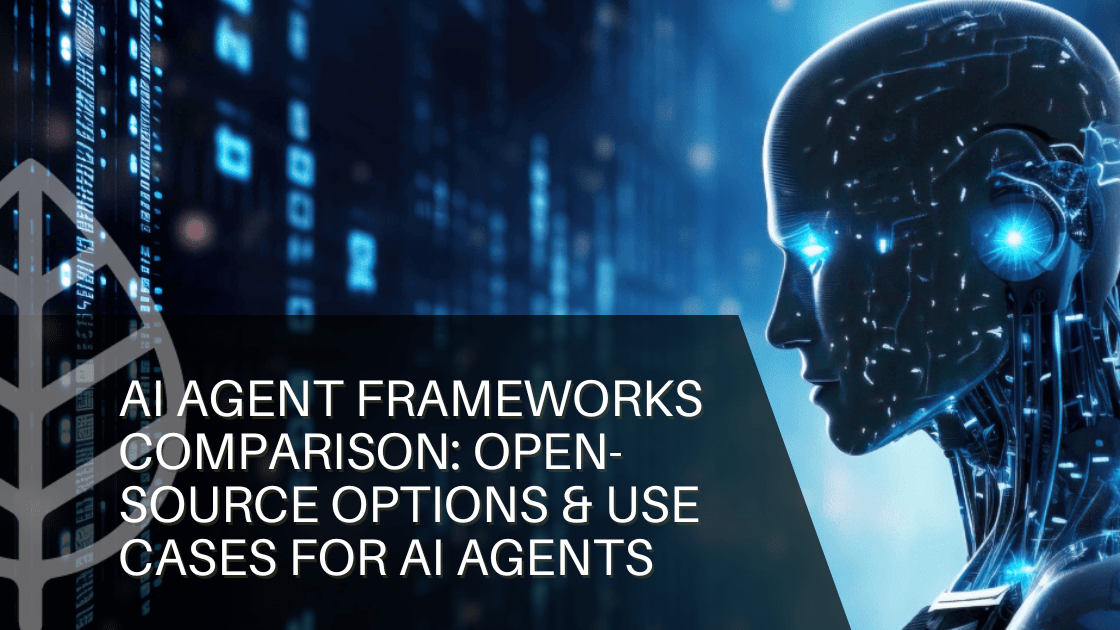
AI Agent Frameworks Comparison: Open-Source Options & Use Cases for AI Agents

AI Agent Frameworks Comparison: Open-Source Options & Use Cases for AI Agents

Are you looking to harness the power of AI to automate tasks, enhance decision-making, or create intelligent applications? Navigating the world of AI agent frameworks can be daunting. This article provides a comprehensive comparison of open-source options, helping you choose the right framework to build AI agents tailored to your specific needs. The AD Leaf West Palm can guide you in implementing these advanced AI solutions for your business.

Key Takeaways

  • Framework Selection: Choosing the right AI agent framework is crucial for successful AI agent development.
  • Open-Source Benefits: Open-source frameworks offer flexibility, customization, and community support.
  • Key Frameworks: Langchain, Langgraph, CrewAI, Autogen, and Mastra are leading options with unique strengths.
  • The AD Leaf: Partnering with The AD Leaf ensures expert implementation and optimization of AI agent workflows.

What are AI Agent Frameworks and Why are They Important?

AI agent frameworks are essential tools for streamlining the development and deployment of AI agents. An AI agent is an AI system that can perceive its environment, make decisions, and take actions to achieve specific goals. These agents are increasingly used in various AI applications, from customer service AI assistants to complex workflow automation. As we move closer to 2026, the importance of these frameworks will only continue to grow.

Understanding AI Agents and Their Applications

AI agents operate autonomously, making them invaluable for tasks requiring continuous monitoring and decision-making. Use cases span various industries, including finance, healthcare, and marketing. For instance, in finance, specialized agents can analyze market trends and execute trades. In healthcare, they can assist in diagnosing diseases and personalizing treatment plans. These AI applications demonstrate the transformative potential of agentic AI.

The Role of Agent Frameworks in AI Development

Agent frameworks provide a structured approach to building AI agents. These frameworks offer pre-built components, APIs, and tools that simplify the development process. Instead of coding everything from scratch, developers can leverage the framework’s capabilities to define agent logic, manage agent interactions, and orchestrate complex workflows. This significantly reduces development time and improves the scalability of AI solutions.

Benefits of Using Open-Source AI Frameworks

Open-source frameworks offer numerous advantages for AI agent development. They are typically free to use, highly customizable, and supported by a vibrant community. This allows developers to tailor the framework to their specific needs and access a wealth of resources and expertise. Open source also fosters innovation and collaboration, leading to continuous improvements and new features. With an open-source framework for building, the possibilities are endless.

How Do Different AI Agent Frameworks Compare?

Choosing an AI agent framework involves evaluating various factors such as ease of use, flexibility, and the availability of community support. Popular options include Langchain, Langgraph, CrewAI, Autogen, and Mastra. Each framework has its strengths and weaknesses, making it crucial to understand its unique features to select the one that best fits your project requirements. By 2026, these open-source frameworks will likely have evolved even further.

Overview of Popular AI Agent Frameworks

Langchain is a versatile framework known for its modularity and extensive integration capabilities, making it suitable for a wide range of AI applications. CrewAI focuses on multi-agent systems, enabling the creation of teams of AI agents that collaborate to solve complex problems. Autogen, Google’s open-source framework for building, facilitates the development of conversational AI agents. Mastra offers a robust development kit for creating and managing AI agents.

Comparing Langchain, Langgraph, and CrewAI

Langchain excels in building RAG (Retrieval-Augmented Generation) pipelines and managing data flow between different components. Langgraph extends Langchain by providing tools for building stateful, multi-agent systems. CrewAI is specifically designed for orchestrating multiple agents working together, making it ideal for projects requiring complex workflows. The choice depends on whether you need flexibility, state management, or multi-agent coordination.

Key Features of Autogen and Mastra Frameworks

Autogen’s key feature is its ability to create conversational AI agents capable of natural language interactions. It is particularly useful for building AI assistants and chatbots. Mastra, on the other hand, focuses on providing a comprehensive development kit for creating and managing AI agents. It includes tools for defining agent behavior, managing agent interactions, and deploying AI agents to various environments. Autogen and Mastra both offer unique strengths in the agentic AI ecosystem.

Side-by-Side Comparison: AI Agent Frameworks by Critical Dimensions

When comparing AI agent frameworks, several critical dimensions come into play. These include the framework’s flexibility, scalability, ease of use, and the level of community support available. For instance, Langchain is known for its flexibility and extensive integration capabilities, while CrewAI excels in orchestrating multi-agent systems. Autogen is tailored for conversational AI, and Mastra provides a comprehensive development kit. Understanding these differences is essential for choosing the right AI framework for your specific needs and making the best decision.

Where Framework Selection Fits in the AI Agent Development Lifecycle

The selection of an AI agent framework is a crucial step in the AI agent development lifecycle. This decision influences everything from the initial design and prototyping to the final deployment and maintenance of the AI agent. Choosing the right framework ensures that the development process is streamlined, efficient, and aligned with the project’s goals. The framework handles the complexity of AI agent creation, allowing developers to focus on the core logic and functionality. Framework selection is key to a successful AI project.

Open-Source vs. Commercial vs. Managed AI Agent Frameworks: Trade-offs for Business

When it comes to AI agent frameworks, businesses have several options: open-source, commercial, and managed frameworks. Open-source frameworks like Langchain and Autogen offer flexibility and customization but require more technical expertise. Commercial frameworks provide robust features and dedicated support but come with a cost. Managed frameworks, often found on platforms like AWS, offer ease of deployment and scalability but may limit customization. The choice depends on your business’s specific needs, budget, and technical capabilities.

AI Agent Frameworks for Small Businesses vs. Enterprise: What Fits Best?

Small businesses and enterprises have different needs when it comes to AI agent frameworks. Small businesses often benefit from user-friendly, open-source frameworks such as LangChain or AutoGen, which offer cost-effective solutions and community support. Enterprises, on the other hand, may require more robust, scalable frameworks with enterprise-grade features and dedicated support. Managed AI agent frameworks on platforms like AWS can also be a good fit for enterprises looking for easy deployment and scalability. Selecting the appropriate framework is crucial for success.

Choosing the Right AI Agent Framework for Your Needs

Choosing the right AI agent framework requires a thorough understanding of your project requirements and the capabilities of different frameworks. Consider factors such as the complexity of the task, the need for multi-agent systems, the level of customization required, and the availability of community support. Frameworks like CrewAI are ideal for multi-agent systems, while Langchain is suitable for a wide range of AI applications. Evaluating these factors will help you select the framework that best aligns with your needs and resources.

Factors to Consider in AI Framework Selection

Selecting an AI framework involves careful consideration of several factors. These include the framework’s ease of use, scalability, flexibility, and integration capabilities. Consider the programming language support (e.g., Python) and the availability of necessary APIs. Also, evaluate the community support and documentation. The framework for building should align with your team’s expertise and the project’s specific requirements. For example, if you need to build AI assistants, Autogen might be a great fit. Ensuring these factors align leads to a better outcome for your AI agent deployment.

Use Cases for Multi-Agent Systems

Multi-agent systems are beneficial in complex scenarios where multiple AI agents collaborate to achieve a common goal. Use cases include supply chain optimization, fraud detection, and autonomous vehicle coordination. In supply chain optimization, multiple agents can manage inventory, logistics, and demand forecasting. In fraud detection, agents can analyze transaction data and identify suspicious patterns. Frameworks like CrewAI are specifically designed to build and orchestrate multi-agent systems, making them ideal for these AI applications. Leveraging multiple agents enhances efficiency and effectiveness.

How to Evaluate Agent Development Kits

Evaluating agent development kits involves assessing their features, usability, and compatibility with your existing infrastructure. Look for development kits that offer comprehensive tools for defining agent behavior, managing agent interactions, and deploying AI agents. The kit should support your preferred programming languages and provide clear documentation and examples. Consider the scalability of the kit and its ability to handle complex workflows. A well-designed development kit simplifies the AI agent development process and improves the quality of your AI solutions. Ensuring the agent development goes smoothly from start to finish.

Limitations & When NOT to Use

While AI agent frameworks offer numerous benefits, it’s essential to recognize their limitations. AI agent frameworks might not be suitable for every project. For instance, simple rule-based systems might be more efficient for straightforward tasks. Using a full-fledged agent framework for such tasks could introduce unnecessary complexity and overhead. Additionally, if you lack the in-house expertise to manage and customize open source frameworks, it may be better to seek simpler, more managed solutions. Consider the specific use case and resources before committing to an AI framework. Choosing the right tool is key. The framework handles the overall process, but not without the right skill set.

What are the Future Trends in AI Agent Frameworks

Looking ahead, AI agent frameworks are poised for significant advancements. We can expect enhanced integration with generative AI and large language models, making it easier to create more sophisticated, context-aware AI agents. The rise of low-code and no-code platforms will also democratize agent development, allowing non-technical users to build AI agents with minimal coding. Furthermore, increased focus on ethical considerations and responsible AI will drive the development of frameworks with built-in safety measures and transparency features. Agentic AI will be even more common.

Emerging Technologies in AI Agent Frameworks

Several emerging technologies are shaping the future of AI agent frameworks. One key trend is the integration of reinforcement learning techniques, enabling AI agents to learn and adapt from experience. Federated learning is another promising area, allowing multiple agents to collaboratively train AI models without sharing sensitive data. Additionally, advancements in edge computing are enabling the deployment of AI agents on resource-constrained devices, opening up new possibilities for real-time decision-making in various AI applications. The open-source framework for building will become more advanced.

The Evolution of Agentic AI

The evolution of agentic AI is driving the development of more sophisticated AI agent frameworks. Early AI agents were primarily rule-based and reactive, but modern agents are becoming increasingly proactive and adaptive. They can reason, plan, and learn from their interactions with the environment. The shift towards more autonomous and intelligent agents is fueled by advancements in areas such as natural language processing, computer vision, and knowledge representation. As agentic AI continues to evolve, AI agent frameworks will need to adapt to support these advancements. The evolution of ai is paving the way for new innovation.

Predictions for AI Agent Frameworks for Business Owners

Business owners can expect AI agent frameworks to become more accessible and easier to use. Open-source options will offer prebuilt AI agent templates and visual workflow designers, allowing business users to quickly create and deploy AI agents without extensive coding knowledge. The framework will provide tools for monitoring agent performance and optimizing their behavior. Moreover, AI agent frameworks will be integrated with popular business applications, making it seamless to automate tasks and improve decision-making. This is all within the realm of possibility with how far AI has come. The AI systems can greatly assist any business.

Key Takeaways from the AI Agent Frameworks Comparison

Choosing the right AI agent framework requires careful consideration of your project’s unique needs and the framework’s capabilities. The open-source framework for building is important for any business to understand.

Summary of Framework Features

When evaluating AI agent frameworks, it’s essential to consider the features each one offers. Langchain, for example, is renowned for its modularity and extensive integration capabilities, supporting a wide range of AI applications through its flexible data flow management. CrewAI specializes in orchestrating multiple agents, making it ideal for projects requiring complex workflows. Autogen, with its focus on conversational AI, excels in creating AI assistants. Choosing the right framework depends on how well these features align with your project’s specific needs. The open-source framework for building should align with your team’s expertise and the project’s specific requirements.

Best Practices for Choosing an AI Agent Framework

Choosing an AI agent framework requires a strategic approach. Start by clearly defining your project’s goals and requirements. Evaluate the open-source frameworks’ ease of use, scalability, and community support. Consider the level of customization needed and the framework’s compatibility with your existing infrastructure. For multi-agent systems, CrewAI might be a good fit, while Langchain is versatile for general AI applications. Also, factor in the programming language support, such as Python, and the availability of necessary APIs. Choosing the right framework ensures efficient agent development.

Future Considerations for AI Agent Development

Several considerations will shape AI agent development. The integration of generative AI and large language models will drive the need for frameworks capable of handling more sophisticated tasks. Ethical considerations and responsible AI will become increasingly important, requiring frameworks with built-in safety measures. The rise of low-code/no-code platforms will democratize agent development, enabling non-technical users to build AI agents. Keeping these trends in mind will help you select a future-proof framework to build your business on. The ecosystem of agentic AI will continue to grow rapidly.

Frequently Asked Questions (FAQs) | The AD Leaf West Palm

Here are some frequently asked questions about AI agent frameworks:

What are the most common use cases for AI agent adoption?

The most common use cases will likely include customer service automation, supply chain optimization, and fraud detection. AI agents will be widely used to handle routine customer inquiries, manage inventory levels, and identify suspicious transactions.

How can I ensure the security and privacy of data when using open source AI frameworks?

To ensure security and privacy, implement robust access control measures, encrypt sensitive data, and regularly audit your AI systems. Use frameworks that support privacy-preserving techniques such as differential privacy and federated learning. Partnering with The AD Leaf can provide that peace of mind.

What level of Python expertise is required to effectively use Langchain and Autogen?

A solid understanding of Python is beneficial. Familiarity with concepts such as object-oriented programming, data structures, and API integration will enable you to effectively leverage the capabilities of these frameworks.

How do Langgraph and CrewAI facilitate multi-agent systems?

Langgraph provides tools for building stateful, multi-agent systems by managing the flow of information and interactions between agents. CrewAI is specifically designed for orchestrating multiple agents, allowing you to define roles, responsibilities, and communication protocols.

What are the key differences between Mastra and Google’s open-source framework for building?

Mastra focuses on providing a comprehensive development kit for managing AI agents, while Google’s open-source framework specializes in building conversational AI agents. Mastra offers tools for defining agent behavior and agent interactions, while Google’s open-source framework for building excels in natural language understanding and generation.

How does The AD Leaf help businesses implement and optimize AI workflows using these frameworks?

The AD Leaf offers expert consulting, development, and deployment services to help businesses leverage AI agent frameworks. We work closely with you to understand your specific needs, select the right framework, and build customized AI solutions that deliver tangible results. By partnering with The AD Leaf, your business can benefit from the power of AI.

What is an AI Agent Framework, and how does it work?

An AI agent framework is a set of tools, libraries, and APIs designed to simplify the process of building AI agents. It provides a structured environment for defining agent logic, managing agent interactions, and orchestrating complex workflows. The framework handles the underlying complexities, allowing developers to focus on creating intelligent and autonomous agents. The agents perceive their environment, make decisions, and take actions to achieve specific goals. Choosing the right framework is crucial for efficient development.

What are the best open-source AI frameworks available?

Here are some excellent open-source AI frameworks available. Each framework has unique strengths that can be very useful. For example, you might consider frameworks that offer:

  • Versatility and extensive integration capabilities, like Langchain.
  • Specialization in building multi-agent systems, such as CrewAI.

Autogen, tailored for conversational AI, or Mastra, which offers a comprehensive development kit for managing AI agents, are other options to consider. The best framework depends on your project’s specific requirements, the need for multiple agents, and the desired level of customization. Open-source frameworks offer flexibility, community support, and continuous improvements.


How can I implement multi-agent systems in my project?

Implementing multi-agent systems involves using frameworks designed for coordinating multiple agents. CrewAI is specifically built for this purpose, allowing you to define roles, responsibilities, and communication protocols for each agent. Langgraph also supports multi-agent systems by providing tools the manage data flow and interactions between agents. These frameworks enable you to create complex workflows where multiple agents collaborate to achieve a common goal. Choosing the right framework is crucial for effective multi-agent coordination.

What are the advantages of using Langchain over other frameworks?

Langchain offers several advantages, making it a popular choice for AI agent development. Its modularity allows you to easily integrate various components and tools. It provides extensive support for RAG pipelines, enabling you to build AI agents that effectively retrieve and generate information. Langchain also offers excellent documentation and a vibrant community, making it easier to get started and troubleshoot issues. Its versatility makes it suitable for a wide range of AI applications. It can also be optimized through Pydantic AI.

How does the development kit influence agentic AI?

The development kit is essential for creating and managing AI agents. A well-designed development kit provides comprehensive tools for defining agent behavior, managing agent interactions, and deploying AI agents to various environments. It simplifies the agent development process and improves the quality of your AI solutions. Look for a development kit that supports your preferred programming languages, offers clear documentation, and provides necessary APIs. The framework provides structure, but the development kit makes the details easier to understand and implement.

What considerations should I keep in mind for AI frameworks?

When considering AI agent frameworks, focus on frameworks that support the latest advancements in generative AI and large language AI models. Look for frameworks that prioritize ethical considerations and responsible AI. Consider frameworks that offer low- or no-code options to democratize agent development. Also, factor in the integration with popular business applications and the availability of tools for monitoring agent performance. Staying up-to-date with these trends will ensure you choose a future-proof framework. The AI systems can also be monitored for performance and to enhance future performance.

What are common misconceptions about AI in search marketing?

A common misconception about AI in search marketing is that it is a replacement for human creativity and expertise. While AI can automate certain tasks and provide valuable insights, it should be used as a tool to enhance, not replace, human efforts. Another misconception is that all AI-generated content is inherently beneficial, while Google prioritizes content that is original, relevant, and provides value to users. Google wants to ensure that accurate responses aren’t “ungrounded” or unhelpful. Contact The AD Leaf Marketing Firm for additional assistance.

About Us

Google Search Console Testing AI Contribution Reporting

Google Search Console Testing AI Contribution Reporting: An Overview of AI’s Role in Google Search

Understanding the impact of artificial intelligence on search engine optimization (SEO) is more critical than ever. Google is testing new ways to provide insight into how AI, particularly its AI overviews, influences search results. For businesses aiming to maintain or improve their online presence, grasping these changes is essential.

Let’s dive into the intricacies of Google’s experimentation with AI and how the Google Search Console is evolving to offer valuable AI performance reports. If you’re struggling to keep up with these changes, the AD Leaf West Palm helps brands adapt and turn search visibility into real growth.

Key Takeaways

  • Google is actively testing AI integration in search, which is affecting how content ranks and appears in AI overviews.
  • The Google Search Console now offers insight into how AI-generated summaries influence your website’s traffic and visibility.
  • Understanding AI contribution reports helps refine SEO strategies, ensuring content aligns with Google’s AI-driven search results.
  • Partnering with a knowledgeable firm like The AD Leaf Las Vegas ensures your marketing strategies align with evolving AI search algorithms.

What is the Google Search Console AI Contribution Report?

The Google Search Console AI Contribution Report is a novel feature designed to provide SEO professionals and website owners insight into how Google’s AI overviews and AI-generated content impact their website’s performance. Google said that this tool is part of testing a new way to understand how artificial intelligence influences search results. This AI contribution pilot aims to offer a more transparent view of the interactions between search queries and AI-driven search results.

Understanding AI Contribution Reports

AI Contribution Reports within Google Search Console aim to break down how AI overviews and other AI-generated content affect your website’s visibility. These reports provide a benchmark for understanding the impact of AI on your organic search traffic. Analyzing these AI performance reports can help you understand the specific queries that trigger AI overviews and how often your site is featured within Google’s response to those queries.

How Google is Testing AI in Search

Google is testing new and innovative ways to integrate AI into its search engine. One notable experiment is Google’s AI-generated answers. These AI overviews provide users with a summary of search results at the top of the page. Google Search is evolving to provide more direct, concise information by leveraging generative AI to answer user queries efficiently. This ongoing testing includes experimenting with new AI and the rollout of Gemini 3 to enhance query understanding.

Importance of AI-Generated Content in SEO

The rise of AI-generated content and Google’s AI overviews has significant implications for SEO. If Google’s AI-generated answers become the primary way users consume information, traditional ranking factors may shift. Optimizing content not just for traditional search results but also for inclusion in AI-driven summaries is crucial. The AD Leaf West Palm can help adapt your SEO strategies to align with these new realities.

How Does Google Search Console Enhance AI Insights?

Google Search Console is becoming an essential tool for understanding the interplay between AI and search performance. By providing AI performance reports, Google Search Console helps website owners and SEOs monitor the impact of AI-driven features, such as AI overviews, on their sites. This insight enables data-driven decisions to optimize content for both traditional search rankings and AI-generated summaries, ensuring broader visibility in Google Search.

Benefits of Using Google Search Console for AI Overviews

Using Google Search Console to analyze AI overviews offers several benefits. It allows you to track the specific queries where your site appears in AI-generated summaries, providing a clear picture of AI’s influence on your traffic. Additionally, you can identify opportunities to optimize content further for inclusion in these summaries, potentially boosting your visibility and attracting more relevant organic traffic from search engines.

Key Features of the AI Contribution Report

The AI Contribution Report is expected to provide several key insights into how AI features affect site performance. This report will likely segment the data by type of AI-driven feature, providing a granular view of AI’s impact. Some of the data provided could be:


MetricDescription
ImpressionsData on impressions for URLs featured in AI overviews.
ClicksData on clicks for URLs featured in AI overviews.
Click-Through Rate (CTR)Click-through rates for URLs featured in AI overviews.


How to Interpret AI Insights from Google Search Console

Interpreting AI insights from Google Search Console involves analyzing the data provided in the AI Contribution Report. Look for trends in the queries that trigger AI overviews and identify high-performing URLs. Pay attention to the click-through rates for these URLs, as they indicate how effectively your content captures user attention within the AI-generated summary. Adjust your SEO strategy accordingly to capitalize on these insights.

What Are the Best Practices for Using AI in Search Marketing?

Strategies for Implementing AI-Generated Content

Implementing AI-generated content requires a strategic approach to ensure it aligns with both search engine guidelines and user expectations. Prioritize quality and accuracy when using AI to create content. Always review and edit AI-generated material to maintain your brand’s voice and verify the accuracy of the information. The integration of AI into your content strategy should enhance, not replace, human creativity and expertise. The AD Leaf West Palm can provide guidance in effectively leveraging AI while maintaining content integrity.

Understanding Google’s Spam Policies and AI Content

Understanding Google’s spam policies is critical when using AI-generated content. Google’s spam policies emphasize the importance of original, high-quality content that provides value to users. Avoid using AI to generate content solely for ranking purposes, as this can be seen as spam. Ensure that your AI content adheres to Google’s guidelines on originality, relevance, and user experience to maintain your site’s standing in search results.

How to Benchmark AI Performance in Search

Benchmarking AI performance in search involves tracking key metrics such as impressions, click-through rates, and rankings for content enhanced or generated by AI. Regularly analyze these AI performance reports to assess the impact of AI on your SEO efforts. Compare the performance of AI-driven content with traditional content to identify areas for improvement, and refine your AI strategies to achieve more accurate responses and better search results.

What Experimentation is Google Still Conducting with AI?

Overview of Gemini and AI-Related Experiments

Google is testing new AI and experimenting with new ways to integrate AI into search. Google’s Gemini 3 is designed to enhance query understanding and provide more relevant results. These AI-related experiments are focused on improving the user experience and delivering more accurate information quickly. Understanding these experiments can help you anticipate future trends in search and prepare your content accordingly.

Future of AI in Google Search

The future of AI in Google Search involves continued integration of AI to improve search accuracy and user satisfaction. Google is likely to expand the use of AI overviews and generative AI to provide more comprehensive and personalized search experiences. Staying informed about these developments is crucial for adapting your SEO strategies and maintaining visibility in Google’s evolving search landscape. Let The AD Leaf West Palm help you navigate these changes.

Community Feedback on AI Contributions

Community feedback on AI contributions plays a significant role in shaping Google’s approach to AI in search. Google is actively soliciting feedback from the search community to identify areas for AI improvement and address concerns about the quality and accuracy of AI-generated content. This feedback loop helps ensure that AI enhancements align with user needs and expectations, resulting in a more effective and user-friendly search experience.

Key Takeaways from Google Search Console AI Testing

Summary of AI’s Impact on Search Marketing

The integration of AI into search marketing is reshaping how content is discovered and consumed, making it crucial for businesses to adapt. Google is testing new AI functionalities that directly influence search results, notably through AI overviews. The AI contribution report within Google Search Console offers valuable insight into how these changes affect website visibility, prompting marketers to rethink their SEO strategies. The AD Leaf West Palm stays on top of the latest trends.

Essential Insights from the AI Contribution Report

The AI Contribution Report within Google Search Console provides a metric to benchmark the performance of your content in AI-driven search results. By analyzing data on impressions, clicks, and rankings, businesses can assess the impact of AI on their SEO efforts. These AI performance reports offer valuable insight into how Google’s AI overviews are influencing user behavior and traffic patterns. Understanding the AI contribution report can help you find areas to focus on and improve your SEO efforts.

Recommendations for Businesses Using AI in SEO

For businesses leveraging AI in SEO, it’s crucial to prioritize quality, relevance, and user experience. Adhere to Google’s spam policies by ensuring AI-generated content is original and provides value. Regularly monitor the AI Contribution Report within Google Search Console to track the impact of AI on your website’s visibility. Google still wants you to create high-quality, engaging content for your audience. Consider partnering with The AD Leaf West Palm for expert SEO guidance and support.

Frequently Asked Questions

How does Google Search Console help with understanding AI-driven search results?

Google Search Console provides tools and reports, such as the AI Contribution Report, that offer insights into how AI features, like AI overviews, impact your website’s visibility and traffic from Google Search. This helps in understanding and adapting to AI-driven changes.

What are AI overviews, and how do they affect my website?

AI overviews are AI-generated summaries that Google displays at the top of search results. They provide quick answers to user queries. If your site is featured in an AI overview, it can drive traffic, but it may also change how users interact with search results.

How can I optimize my content for inclusion in AI overviews?

To optimize for AI overviews, focus on creating clear, concise, and accurate content that directly answers common search queries. Use structured data markup to help Google understand your content, and ensure your site is mobile-friendly and fast-loading.

What should I do if my website is not appearing in AI overviews?

If your site isn’t in AI overviews, review your content to ensure it provides direct answers to relevant queries. Improve your site’s authority by building high-quality backlinks and consider consulting with SEO experts like The AD Leaf Marketing Firm.

How often should I check the AI Contribution Report in Google Search Console?

Regularly monitor the AI Contribution Report, ideally weekly or biweekly, to stay up to date on how AI features are impacting your site. This allows you to make timely adjustments to your SEO strategy and content.

What is the best way to stay updated on Google’s AI-driven search changes?

Stay informed by following industry news, attending webinars, and subscribing to SEO blogs. Additionally, consider partnering with a digital marketing agency like The AD Leaf Marketing Firm, which stays abreast of the latest AI developments and search engine updates.

How does the AI Contribution Report differ from traditional metrics?

The AI Contribution Report in Google Search Console offers unique insights by focusing specifically on the impact of AI features, such as AI overviews, on your website’s performance. Unlike traditional metrics that measure overall search traffic and rankings, this report isolates the influence of AI-driven search results. This AI contribution pilot enables more targeted analysis of how Google’s new AI initiatives affect user engagement with your URLs, how often they appear on Google’s radar, and how your website appears in Google’s response to a user query.

What types of AI-generated content are considered beneficial by Google?

Google considers AI-generated content beneficial when it enhances the user experience by providing accurate responses, relevant information, and original insights. Content that directly answers user queries, is well-structured, and offers unique value is more likely to be favored. Avoid using AI to create low-quality or repetitive content solely to improve rankings, as this may violate Google’s spam policies. Work with The AD Leaf Marketing Firm to determine the most effective SEO strategies for generating AI content.

How can businesses ensure compliance with Google’s AI policies?

To ensure compliance with Google’s AI policies, businesses must prioritize originality, relevance, and user experience when using AI-generated content. Regularly review and edit AI outputs to maintain accuracy and quality. Avoid using AI to generate content that is deceptive, misleading, or violates Google’s guidelines on spam. Monitor AI performance reports in Google Search Console to assess the impact of your AI strategies. The search community and Google said that maintaining these standards can help enhance your search results.

What role does Gemini play in enhancing AI capabilities?

Gemini plays a crucial role in enhancing AI capabilities by improving query understanding and generating more relevant and accurate responses. Google is testing Gemini 3 in its search engine to deliver more comprehensive and personalized results. Gemini’s advanced natural language processing capabilities help Google better understand user intent and deliver information that aligns with their needs. The AD Leaf Marketing Firm can help you stay informed of these constant experiments with new AI.

How can I leverage Google Search Console for better AI insights?

You can leverage Google Search Console for better AI insight by regularly monitoring the AI Contribution Report. This report provides data on impressions, clicks, and rankings for URLs featured in AI overviews and other AI-driven features. Analyze these AI performance reports to identify trends and opportunities for optimizing your content for inclusion in Google’s AI initiatives. Google still aims to have you use these insights for better SEO.

What are common misconceptions about AI in search marketing?

A common misconception about AI in search marketing is that it is a replacement for human creativity and expertise. While AI can automate certain tasks and provide valuable insights, it should be used as a tool to enhance, not replace, human efforts. Another misconception is that all AI-generated content is inherently beneficial, while Google prioritizes content that is original, relevant, and provides value to users. Google wants to ensure that accurate responses aren’t “ungrounded” or unhelpful. Contact The AD Leaf Marketing Firm for additional assistance.
About Us

Content Creation with AI: Workflows, Quality Control, and E-E-A-T That Actually Rank

Artificial intelligence has fundamentally changed how businesses approach AI content creation and AI SEO content production. Tasks like outlining, researching, drafting, and formatting — which once required entire teams — can now be completed using AI tools in minutes. While speed has dramatically improved, ranking performance still depends on quality, trust, and expertise.

Today, successful AI marketing content strategies are built around structure, editing, and search quality principles established by organizations like Google. Search engines are no longer rewarding volume alone. Instead, they prioritize helpful, accurate, experience-driven content that demonstrates authority.

AI is powerful, but without a strong workflow, it often produces generic or repetitive content. Businesses that succeed with AI SEO content follow structured systems that combine automation with human expertise.

Why AI Content Creation Requires Structure

Many companies mistakenly believe AI content creation means “publish faster.” In reality, AI works best when integrated into an intentional content workflow.

A proven AI SEO content workflow includes:

  • Keyword research and search intent analysis
    • AI outline generation
    • AI draft creation
    • Human editing and fact checking
    • SEO optimization
    • Final quality review

This workflow allows marketing teams to scale AI marketing content without sacrificing quality. AI handles repetitive tasks, while humans provide strategy and expertise.

Research shows how widespread AI content creation has become. Around 85% of marketers now use AI for content creation, and most review outputs before publishing to ensure accuracy and authenticity.

This proves AI is not replacing content teams — it’s becoming a productivity tool.

Building Quality Control Into AI SEO Content

Publishing raw AI content is risky. AI can create outdated statistics, vague statements, or unnatural phrasing. That’s why quality control is essential in AI content creation workflows.

When reviewing AI marketing content, focus on:

  • Accuracy of facts and statistics
    • Clarity and readability
    • Brand voice consistency
    • Keyword placement
    • User value and helpfulness

Tools like Grammarly help improve grammar and clarity, but human editing is still critical for adding experience and insight.

The goal is simple: AI generates the structure, humans add depth and credibility.

Understanding E-E-A-T in AI SEO Content

Search engines evaluate content using E-E-A-T (Experience, Expertise, Authoritativeness, Trustworthiness). AI alone cannot create these signals.

To strengthen E-E-A-T in AI content creation:

  • Add real examples or case studies
    • Share real-world experience
    • Reference trusted sources
    • Keep data transparent and current

Businesses that combine AI marketing content with real expertise consistently outperform mass-generated content.

Balancing Speed and Value in AI Marketing Content

AI SEO content should be treated as an assistant, not a replacement for human writers. AI can produce drafts quickly, but real performance comes from editing and adding unique value.

Companies using AI strategically often produce 42% more content output while maintaining quality through review processes.

This allows businesses to scale content marketing while maintaining search visibility and trust.

Final Thoughts

AI content creation is not about replacing human creativity. It’s about improving efficiency while protecting quality.

When you combine structured workflows, strong editing standards, and E-E-A-T principles, AI SEO content becomes a powerful long-term strategy.

How AI Reshaped Social Media Marketing in 2025, And What It Means for Your South Florida Brand

Artificial intelligence didn’t just influence marketing in 2025, it redefined it. As competition increases and consumers juggle endless content, South Florida brands had to rethink how they connect, communicate, and convert in a fast-moving, lifestyle-driven market. While traditional marketing tactics like SEO and old-school content strategies lost some of their edge, AI opened new opportunities for creativity, audience insight, and community building, especially for businesses in real estate, hospitality, wellness, retail, and tourism.

The Changing Nature of Search and SEO

In 2025, people stopped relying purely on traditional search engines the way they once did. With AI-powered search tools becoming more common, simple keyword-focused SEO started losing effectiveness. Instead of writing for search bots, marketers needed to write with intent, focusing on content that genuinely answered questions and provided value.

For South Florida businesses competing for both local residents and seasonal visitors, this shift meant getting smarter about how content was written. Brands that integrated AI into their SEO strategy, analyzing how people search and optimizing around intent rather than keywords, were more likely to stay visible online. (SFGate Marketing)

Using AI to Boost Productivity and Creativity

AI isn’t a magic replacement for human creativity, but in 2025 it became one of the most powerful tools in a marketer’s toolkit. Brands that embraced AI saw major productivity improvements (many reporting 26–55% efficiency gains) and stronger ROI from smarter content creation workflows.

What made AI so impactful wasn’t that it did everything, it’s that it helped teams work smarter. AI tools generated ideas, repurposed existing content, and sped up production so South Florida brands could stay consistent across platforms without sacrificing quality, even in highly visual, trend-driven industries.

Experts like Mandee Banga from Hearst Bay Area emphasize that AI should be a content partner, not a replacement. Real strategic thinking, understanding your audience, mission, and brand personality, still has to come from people. (SFGate Marketing)

Amplifying Your Brand Voice with AI

With the explosion of platforms and content formats, from blogs and social media posts to videos and paid ads, brands faced the challenge of maintaining a consistent voice across channels. AI helped solve this by enabling teams to align messaging and generate ideas that fit their brand personality everywhere.

The first question any business needs to answer is: Who are we talking to, and what do we want to say? Once that’s clear, AI can help tailor that voice across formats and platforms, whether you’re reaching local residents, tourists, or a broader international audience visiting South Florida.

Industry experts also recommend programming AI tools with detailed brand information, including mission, audience, tone, and goals, so the output remains accurate, relevant, and authentically on-brand.

From Followers to Community

In 2025, just having followers wasn’t enough, brands needed connection. Authentic brand communities became essential for loyalty and long-term engagement. This meant going beyond curated visuals and promotions to cultivating spaces where audiences could interact, get value, and feel heard. (SFGate Marketing)

Different platforms played different roles:

  • Facebook Groups: Strong for local and niche communities
  • X (formerly Twitter): Real-time updates, events, and thought leadership
  • YouTube Shorts: Discoverability and educational storytelling
  • Instagram Reels: Lifestyle-driven, shareable content
  • TikTok: Trend-forward, authentic short-form videos
  • LinkedIn: Professional storytelling and brand credibility

The takeaway? Engagement isn’t just about likes, it’s about building relationships that turn casual viewers into loyal advocates.

What This Means for Marketers in 2026 and Beyond

The trends that shaped 2025 aren’t disappearing, they’re accelerating. AI will continue to evolve, and social media platforms will keep changing how content is discovered and consumed. Yet two things remain constant:

  • Human insight matters. AI can optimize efficiency and scale, but connection, strategy, and cultural relevance still come from people.
  • Consistency builds trust. Brands that use AI thoughtfully, not just for automation, to deliver meaningful content will perform best in the long run.

In a diverse, competitive, and visually-driven market like South Florida, standing out means blending smart automation with a strong human voice and intentional strategy.

Final Thought: Why The AD Leaf

AI transformed social media marketing in 2025, but it didn’t replace the need for creativity, connection, or strategy, and that’s exactly where The AD Leaf stands apart. Serving brands across South Florida and beyond, we combine data-driven insights, emerging technology, and human creativity to help businesses adapt, experiment, and stay authentic in an ever-changing digital landscape. By focusing on meaningful connections and intentional strategy, The AD Leaf empowers brands to use AI effectively and resonate with their audiences like never before.

How a Good Logo Defines Your Business

A logo is more than a visual identifier. It is the foundation of your brand’s identity. In many cases, it is the first impression a customer has of your business, shaping how they perceive your credibility, professionalism, and value before they ever read a word of copy or speak to your team. A strong logo design does not just look good. It communicates purpose, builds recognition, and supports long term brand growth.

In today’s crowded digital landscape, businesses are competing for attention in milliseconds. Your logo plays a major role in whether that attention turns into trust.


Why Logo Design Matters More Than You Think

People may say not to judge a book by its cover, but research consistently proves otherwise. According to Google Research, users form an opinion about a brand’s visual design in as little as 50 milliseconds. That snap judgment can determine whether someone continues engaging with your business or moves on to a competitor.

A professionally designed logo instantly signals legitimacy. It tells your audience that your business is established, thoughtful, and invested in its brand. On the other hand, an unpolished or inconsistent logo can raise doubts, even if your products or services are excellent.

This is why logo design is not just a creative exercise. It is a strategic business decision.


Logo Design and Brand Recognition

One of the most valuable benefits of a strong logo is recognition. Consistent branding helps customers remember who you are and what you stand for. In fact, studies show that consistent brand presentation can increase revenue by up to 23 percent (Lucidpress).

Your logo is the visual anchor of that consistency. It appears on your website, social media profiles, advertisements, packaging, signage, and more. Every time someone sees it, they are building familiarity with your brand. Over time, that familiarity turns into trust.

Think about iconic brands you recognize instantly, often by color, shape, or typography alone. That level of recognition does not happen by accident. It is the result of intentional logo design and brand strategy.


The Role of Color in Logo Design

Color is one of the most powerful tools in branding. It influences emotion, perception, and behavior, often on a subconscious level. Research from the University of Loyola, Maryland, found that color can increase brand recognition by up to 80 percent.

Different colors evoke different feelings:

  • Blue often conveys trust, reliability, and professionalism 
  • Red suggests energy, passion, and urgency 
  • Yellow communicates warmth, optimism, and friendliness 
  • Green is commonly associated with growth, health, and sustainability 

Beyond color choice, saturation and contrast matter just as much. A logo needs to perform across multiple environments, including light and dark backgrounds, digital screens, print materials, and promotional items. This is why professional logo design includes multiple variations, such as full color, black, and white versions.


Simplicity and Symbolism

Some of the most recognizable logos in the world are also the simplest. Minimalism in logo design improves memorability and versatility. A clean, intentional symbol is easier to recall and more adaptable across platforms than a complex or cluttered design.

Effective logo symbols do not need to be literal. Instead, they often represent ideas, values, or feelings associated with the brand. When done right, a symbol becomes synonymous with the business itself.

Simplicity also communicates confidence. A well considered logo shows that your brand knows who it is and does not need to overcompensate visually.


Typography: The Unsung Hero of Logo Design

Typography plays a critical role in how your logo is perceived. The typeface you choose can suggest tradition, innovation, luxury, approachability, or authority, sometimes all without a single image.

Readability should always be a priority. While decorative or script fonts can look appealing, they often sacrifice clarity, especially at smaller sizes. Serif and sans serif fonts tend to offer better legibility and versatility across media.

Spacing, alignment, and hierarchy all contribute to how polished and professional your logo feels. These details may seem subtle, but collectively they have a significant impact on the overall brand impression.


A Logo as a Long Term Investment

A well designed logo is not a short term asset. It is something your business will grow with over time. Investing in professional logo design early can save you from costly rebrands down the road and help establish credibility from the start.

An unprofessional logo can unintentionally signal inexperience or inconsistency. Customers may question whether the same lack of attention applies to your products or services. In contrast, a strong logo builds confidence and sets clear expectations.


Why The AD Leaf

At The AD Leaf, we understand that logo design is about more than aesthetics. It is about strategy, storytelling, and brand positioning. Our graphic design team creates logos that are intentional, scalable, and aligned with your business goals. Whether you are launching a new brand or refreshing an existing one, we focus on creating designs that stand the test of time and resonate with your target audience.

From concept development to final execution, we help businesses build visual identities that support long term growth and recognition. If you are ready to elevate your brand with professional logo design, The AD Leaf is here to help.

5 Key Statistics You Need to Know About Social Media in 2026 

In 2026, social media is a global culture, an economic force, and a daily habit for billions of people. From how many people use social media to how long they spend online and how brands capitalize on engagement, the landscape continues to evolve. In order to develop a strong and cohesive social media strategy, you need to know the social media stats data you’re dealing with! We’re going to give you a high-level overview of some of the biggest statistics you need to know as you craft your social media strategy.

1. Over Two-Thirds of the World Now Uses Social Media

Perhaps the most staggering of social media statistics from 2026 reflect how deeply these platforms have penetrated global life. According to the Digital 2026 Report, there are 5.66 billion “social media user identities,” or about 68.7% of the world’s population actively using social platforms as of late 2025 into 2026, meaning more than two out of every three people on Earth are on social media.

To put this in perspective, the world’s total population is just over 8 billion, and social media users now outnumber non-users roughly 2 to 1. That kind of reach would have been unfathomable just a decade ago. For brands, this means nearly every target audience can be found online. For communities, it means our digital and real worlds are more intertwined than ever.

2. Nearly 139 Million Instagram and Facebook Reels Are Consumed Every Minute

Content consumption has reached staggering levels, which carries massive implications for marketers. Short-form video is no longer just engaging, but also dominates user attention. Reels are now one of the most effective formats for reach, discovery, and ad performance across Meta platforms.

For marketing teams, this means that video-first strategies are no longer optional. Brands that otherwise fail to prioritize Reels risk algorithmic invisibility! However, publishing video-centric content consistently isn’t powerful enough to gain a strong foothold in a particular industry’s market. Businesses that are present in the digital world are competing for the first spare seconds of a user’s next scroll, so creatives must be optimized for fast attention capture that directly and accurately targets their audience’s pain points. 

3. TikTok Shop Converts Nearly Half of TikTok Users Into Buyers

Social commerce continues to accelerate, and one of the most powerful social media statistics 2026 reveals just how effective in-app shopping has become. According to Hootsuite, the rising popularity of TikTok Shop is converting nearly 50% of the app’s users into buyers.

This statistic signals a major shift in buyer behavior. TikTok is no longer just a discovery platform, but a transaction engine. Consumers are increasingly comfortable purchasing products directly inside the apps where they spend time scrolling.

This shift highlights a profound transformation: social platforms are no longer just about connection or entertainment; they are key drivers of shopping behavior and product discovery. TikTok Shop, Instagram Checkout, and other in-app commerce tools have blurred the lines between browsing, engagement, and shopping.

If your business isn’t investing in social commerce, even just with native shopping tools, you’re missing out on a massive segment of your consumers’ behaviors.


4. Global Social Media Ad Spend Is Expected to Exceed $277 Billion in 2026

With billions of users and increasing time spent online, social media has become a dominant advertising channel. A new reality is brought to fruition: attention is bought, not borrowed. Brands that underinvest in paid social risk losing visibility to competitors who are aggressively capturing audience mindshare through advanced targeting and creative optimization.

From advanced targeting and analytics to tailored video campaigns and interactive formats, companies of all sizes are reallocating budgets to capture user attention where it’s most abundant. Social media ads now outpace even search engines and traditional TV for brand visibility, especially amongst younger demographics.

Whether you’re a small business or a global brand, incorporating social media ad spend into your marketing plan is now essential. Foregoing this channel of business puts you at risk of ceding ground to competitors who are meeting consumers where they already spend most of their time.

5. 88% of Brands Say Community Engagement on Social Media Directly Impacts Customer Loyalty

As social platforms evolve into long-term relationship channels, community management has become a critical marketing function. Hootsuite’s research highlights that brands are increasingly seeing measurable value from responding to comments, participating in conversations, and fostering two-way engagement rather than broadcasting one-way messaging.

For marketers, this insight reframes social media from a content calendar exercise into an ongoing brand experience. Audiences now expect brands to be present, responsive, and human, especially when questions, feedback, or concerns arise publicly. When handled well, these interactions build trust and emotional connection that paid campaigns alone can’t replicate.

Engagement is no longer a bonus to staying with a reliable business partner. It is a loyalty driver, a reputation safeguard, and a quality that distinguishes your brand from the competition. Staying dedicated to a social media strategy founded upon consistent engagement reaps long-term growth for your business. 

Why The AD Leaf?

With these fresh, month-old statistics revealing explosive growth in video consumption, ad spend, and social commerce, brands cannot just rely on trends to maintain business effectively; they need execution backed by strategy. That’s where The AD Leaf comes in.

Navigating a landscape where platforms function as digital malls requires precision, not guesswork. The AD Leaf helps businesses turn social media statistics from 2026 into actionable marketing strategies that prioritize ROI, audience behavior, and scalable growth. From performance-driven ad campaigns to content strategies optimized for short-form video and social commerce, our team bridges the gap between data and results.

In a world where social media is shaping how people discover, engage, and buy, the AD Leaf empowers brands to stay visible, competitive, and conversion-focused. Let us take the weight off your back and craft a campaign with your goals in mind.

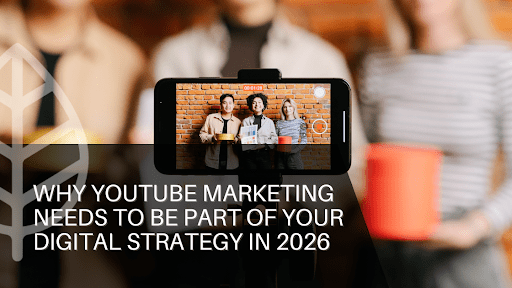
Why YouTube Marketing Needs To Be Part of Your Digital Strategy in 2026


YouTube marketing has evolved from a secondary branding tactic into a primary driver of digital growth. As video consumption continues to dominate online behavior, businesses that invest in a strategic YouTube marketing plan position themselves for stronger visibility, engagement, and long-term ROI.

Video content marketing is no longer optional; it is essential.

According to YouTube’s official 2026 outlook, the platform continues to expand beyond traditional video hosting into connected TV, AI-powered content discovery, and immersive shopping experiences, reshaping how brands approach YouTube advertising and video marketing strategy.

The Growing Power of YouTube Marketing

YouTube marketing allows brands to combine storytelling, search engine visibility, and audience targeting into one cohesive strategy. Unlike static digital ads, video marketing strategy creates an emotional connection, builds authority, and increases brand recall.

YouTube SEO also plays a crucial role. As the second-largest search engine in the world, YouTube rewards optimized titles, descriptions, tags, and consistent video content marketing. Businesses that leverage YouTube SEO properly often see increased visibility not only within YouTube but also in Google search results.

For brands looking to expand digital reach, YouTube marketing offers:

  • Long-form content opportunities
  • Short-form YouTube Shorts visibility
  • Connected TV advertising exposure
  • AI-driven audience targeting

Key Benefits of YouTube Marketing

1. Enhanced Brand Authority: A consistent video marketing strategy positions your company as an industry expert. Educational content, testimonials, and behind-the-scenes videos build trust faster than traditional display ads.

2. Stronger Search Visibility: YouTube SEO improves discoverability. Optimized video content marketing increases your chances of ranking on both YouTube and Google, driving organic traffic.

3. Higher Engagement Rates: Video content captures attention longer than text-based content. YouTube marketing encourages comments, shares, and subscriptions, which strengthen audience relationships.

4. Multi-Device Reach: From mobile devices to connected televisions, YouTube advertising allows businesses to reach audiences wherever they consume content.

5. Scalable Advertising Options: With YouTube advertising, brands can run skippable ads, non-skippable ads, bumper ads, and in-feed video ads,  tailoring campaigns based on budget and objectives.

Why YouTube Marketing Matters in 2026

YouTube’s 2026 roadmap highlights expanded AI personalization, increased connected TV viewership, and enhanced creator partnerships. This means businesses that adopt structured YouTube marketing today will benefit from advanced targeting and distribution capabilities tomorrow.

A professional video marketing strategy ensures that your YouTube marketing investment drives measurable outcomes, including leads, conversions, and brand recognition.

Learn more about our YouTube marketing services here: https://www.theadleaf.com/youtube-advertising-agency 

Why The AD Leaf

At The AD Leaf, we develop comprehensive YouTube marketing strategies designed to align with your broader digital marketing goals. From YouTube SEO optimization to full-scale YouTube advertising campaigns, our team creates data-driven video marketing strategies that increase visibility, engagement, and revenue.


AI SEO for Local Brands: Playbooks for Service Providers, SaaS, and eCommerce

West Palm Beach is a market defined by reputation, trust, and consistency. Businesses compete not only on services and products but on perceived credibility and local authority. AI SEO for local brands has become a critical factor for West Palm Beach businesses that want to remain visible in a refined and competitive environment.

Search engines and AI powered discovery platforms now decide which businesses appear when customers search for solutions. AI SEO for local brands allows West Palm Beach companies to align their digital presence with how residents, seasonal visitors, and business decision makers search today. For business owners and marketing managers, adapting to AI SEO for local brands is essential for sustained growth.

How AI Is Influencing Local Search in West Palm Beach

Search behavior in West Palm Beach emphasizes trust, proximity, and quality. AI driven search systems evaluate these signals using natural language processing, behavioral analysis, and contextual relevance. AI SEO for local brands ensures businesses communicate clarity and authority across every digital touchpoint.

Artificial intelligence prioritizes content that answers real questions and demonstrates local understanding. According to Ranktracker, 32 percent of U.S. adults believe AI provides a better experience than traditional search when looking for a local business. This reinforces why AI SEO for local brands is shaping competition in West Palm Beach.

Businesses that structure content around local intent and credibility are better positioned to appear in AI driven search results.

AI SEO Playbook for West Palm Beach Service Providers

Service providers in West Palm Beach rely heavily on trust and word of mouth. AI SEO for local brands strengthens that trust digitally by aligning content with how customers search and evaluate services.

Effective AI SEO for local brands strategies for service providers include location specific service pages, clear descriptions of expertise, and content that addresses common client concerns. AI tools analyze which services generate the highest intent searches and which language patterns lead to calls and inquiries.

Reviews, testimonials, and accurate business listings play a key role in AI SEO for local brands. AI systems evaluate consistency and credibility when ranking local businesses. Service providers that optimize these signals see improved visibility and stronger lead quality.

AI SEO for local brands helps West Palm Beach service providers attract customers who value professionalism and reliability.

AI SEO Playbook for West Palm Beach SaaS Companies

SaaS companies serving West Palm Beach businesses often operate in industries such as finance, real estate, healthcare, and professional services. AI SEO for local brands allows SaaS companies to connect with decision makers searching for solutions tailored to regional needs.

AI SEO for local brands enables the creation of localized landing pages, regional insights, and industry focused content that resonates with West Palm Beach audiences. AI driven analysis identifies how search intent differs across markets, allowing SaaS companies to adjust messaging without losing consistency.

Structured data, authoritative resources, and clear positioning help AI systems interpret relevance. When AI understands how a SaaS platform supports West Palm Beach businesses, visibility improves in high intent searches.

SaaS companies that adopt AI SEO for local brands build credibility and trust within their target industries.

AI SEO Playbook for West Palm Beach eCommerce Brands

eCommerce brands serving West Palm Beach customers benefit from localized optimization that reflects delivery expectations, purchasing behavior, and seasonal demand. AI SEO for local brands helps eCommerce companies remain visible when customers are ready to buy.

AI systems analyze regional trends and buyer behavior. AI SEO for local brands supports localized product descriptions, delivery messaging, and promotional content that aligns with customer expectations.

Voice search and AI assisted recommendations continue to grow. AI SEO for local brands ensures product data is structured so AI systems can easily surface relevant products during conversational searches.

For West Palm Beach eCommerce brands, AI SEO for local brands improves both discovery and conversion by aligning content with buyer intent.

Why AI SEO for Local Brands Matters in West Palm Beach

West Palm Beach is a market where reputation matters. AI SEO for local brands provides a competitive advantage by reinforcing trust and authority in digital search environments.

AI driven search rewards businesses that offer clarity, consistency, and local relevance. Companies that rely on outdated SEO tactics risk losing visibility to competitors that invest in AI SEO for local brands.

By adopting AI SEO for local brands, West Palm Beach businesses position themselves for long term visibility and growth in an AI driven search landscape.

Why The AD Leaf West Palm Beach

The AD Leaf West Palm Beach helps businesses implement AI SEO for local brands strategies that deliver measurable results. Our team understands the expectations of the West Palm Beach market and how AI driven search systems evaluate credibility and relevance.

We help service providers, SaaS companies, and eCommerce brands strengthen their digital presence and attract high intent customers. The AD Leaf West Palm Beach builds AI SEO for local brands strategies designed for sustainable growth.

If you want to elevate your visibility, build trust, and stay competitive in West Palm Beach, now is the time to act. Call The AD Leaf West Palm Beach today and grow your business with AI SEO for local brands.


Maximizing Holiday Sales: Holiday Marketing Strategies for South Florida Businesses

The 2025 holiday season is shaping up with both challenges and opportunities for companies in South Florida. As consumer habits evolve and economic indicators influence purchasing decisions, your holiday marketing strategies must adapt accordingly. Rather than reacting in the moment, businesses that plan with strong holiday marketing strategies are the ones that capture attention, drive sales, and build lasting customer loyalty.

Understanding the 2025 Holiday Spending Trends

In recent years, spending patterns have shifted online, in-store, and early versus last-minute. Core U.S. retail sales during the 2024 holiday season reached a record $994.1 billion, which is 4% higher than in 2023. Online and other non-store sales jumped by 8.6%, reaching about $296.7 billion in that same period (NRF, 2025). These numbers confirm that consumers continue to spend and that successful holiday marketing strategies must meet them where they are.

Key Approaches for Strong Holiday Marketing Strategies

Here are several proven methods to incorporate into your holiday marketing strategies so your South Florida business can stand out:

1. Begin Planning Early

Waiting until November is waiting too long. Start your creative and promotional planning as early as summer or early fall. Draft content calendars, map out promotions and discounts, and secure product or inventory logistics. This gives your holiday marketing strategies time to mature, become refined, and be tested before major spending begins.

2. Prioritize Customer Experience

Shoppers often abandon carts when sites are slow, confusing, or not mobile-optimized. Make sure your website is fully responsive, loads quickly, and allows seamless transactions across devices. Live chat or chatbots can answer urgent questions (shipping dates, gift-wrapping, stock levels), enhancing trust. These customer-focused tweaks are essential holiday marketing strategies that can meaningfully improve conversions.

3. Leverage Social Media Engagement

Social networks thrive during the holiday season. Utilize Instagram Reels, Facebook Stories, TikTok videos, and live sessions to showcase your best products, offer behind-the-scenes looks, or share gift ideas. Run interactive content, such as polls or contests, to engage people. Always including direct links to your shop is a core piece of holiday marketing strategies that turns engagement into revenue.

4. Deploy Email Campaigns That Convert

Email remains one of the strongest channels in holiday marketing strategies. Segment your subscribers: long-time customers, new leads, newsletter-only fans, and craft targeted messages. Offer early access, exclusive discounts, last-minute gift ideas, or “free shipping if you buy within 24 hours.” Create urgency and personalization to elevate those email opens and clicks into purchases.

5. Use Loyalty Programs & Retargeting

Loyal customers already trust your brand, so reward them. Offer perks, early previews, or loyalty-only discounts. For a broader reach, use retargeting ads to re-engage visitors who viewed products but didn’t buy. Combining loyalty and retargeting is a potent component of holiday marketing strategies, maximizing both customer retention and recovery of otherwise lost sales.

Optimizing Your Strategy for Efficiency and Growth

Given economic caution and shifting consumer priorities, these optimizations will strengthen your holiday marketing strategies in 2025:

  • Focus on Data & Analytics: Monitor which products are trending, where traffic is coming from, and what campaigns are generating revenue. Use tools like Google Analytics and e-commerce dashboards to adapt quickly. 
  • Flexible Payment & Value Messaging: Offer payment options like Buy Now, Pay Later (BNPL), which can reduce friction. Emphasize value bundle deals, free shipping thresholds, and satisfaction guarantees, especially in gift-heavy categories. 
  • Omnichannel Approach: If you have a physical store in South Florida, ensure your local store promotions, pickup options, and online presence align. Consumers often explore online, then purchase in person, vice versa. Unified holiday marketing strategies across channels win more sales. 
  • Test & Refine Messaging: Not all messages are equally effective. Run A/B tests on subject lines, promotional offers, and visuals. Keep what works, drop what doesn’t. Optimization is a central pillar of effective holiday marketing strategies. 

Why The AD Leaf

At The AD Leaf – South Florida, we specialize in tailoring holiday marketing strategies for local businesses in Miami, Fort Lauderdale, West Palm Beach, and the wider region. We understand the unique customer dynamics and competitive landscape here, and leverage that insight to build campaigns that work.

Partnering with The AD Leaf means:

  • Custom Strategy: Designs specific to your business goals, whether more foot traffic, stronger online sales, or higher customer loyalty. 
  • Integrated Channels: Social media, email, website, and local ads all aligned for maximum impact using proven holiday marketing strategies. 
  • Measurable & Adaptable Execution: We track results, iterate quickly, and adjust promotions in real-time as data becomes available, ensuring your campaigns remain effective and efficient. 

Let us help your South Florida business not only survive but also thrive through the 2025 holiday season with holiday marketing strategies designed to drive revenue, build trust, and leave a lasting impression. Contact The AD Leaf today to get started.

ai marketing agency

Google Gemini: Everything You Need To Know

How Good Is Google Gemini Advanced?

So, you want to know just how good Google Gemini Advanced really is, huh? Well, buckle up because we’re about to take a deep dive into all the nitty-gritty details. As a team of seasoned researchers and analysts, we’ve had the opportunity to thoroughly evaluate this highly anticipated language model and chatbot. And let me tell you, the results have been, well, quite intriguing. From its multimodal features to its improved reasoning capabilities, Gemini Advanced seems to have it all. But here’s the twist: user experiences have been all over the map, with some expressing disappointment and others offering moderate praise. What could be causing this discrepancy? And what do the experts have to say? Trust me, it’s a puzzle worth unraveling. So, let’s get to the bottom of this and see if Gemini Advanced lives up to the hype.

Key Takeaways

  • Gemini Advanced is a language model and chatbot released by Google.
  • Users have expressed disappointment with Gemini Advanced’s performance and consider it to be of low quality in terms of its responses.
  • Experts and casual users have conflicting reviews, with experts offering moderate praise and users expressing disappointment.
  • There is a need for further evaluation and evidence to reach a clearer understanding of Gemini Advanced’s performance.

What is Google Gemini Advanced?

Gemini Advanced is a language model and chatbot released by Google. It offers a range of features and is priced at $19.99 per month. Users can also enjoy a free trial period of two months. Gemini Advanced is available through Google One and can be accessed as an app on Android and iOS devices. It has been launched in 150 countries and supports the English language. This advanced version of Gemini is multimodal, equipped with data analysis capabilities, and offers improved reasoning compared to Gemini Pro. It is important to note that while Gemini Advanced has received praise from experts, some users have expressed disappointment with its performance. To fully evaluate its effectiveness, further analysis and evidence are needed.

Users’ Perception of Gemini Advanced

After considering the features and pricing of Gemini Advanced, it is important to examine how users perceive its performance. Comparing user reviews and evaluating user satisfaction reveals a general disappointment with Gemini Advanced. Many users have expressed dissatisfaction, stating that it falls short in terms of accuracy and knowledge compared to GPT-4. Gemini Advanced has also been shown to fail in certain tests, such as the feather-lead weight test and the apple test. Users have reported that GPT-3.5 performs better than Gemini Advanced in reasoning tests. Overall, the consensus among users is that Gemini Advanced provides low-quality responses. These user perceptions highlight the need for further improvement and development in order to enhance user satisfaction.

Contrasting Reviews From Experts and Users

Experts and users have contrasting reviews when it comes to evaluating the performance of Gemini Advanced.

  • Expert opinions:
  • Ethan Mollick suggests that Gemini Advanced is on par with GPT-4 in terms of performance.
  • François Chollet, a Googler, praises Gemini Advanced for its coding assistance.
  • User experiences:
  • Users express disappointment with Gemini Advanced’s performance.
  • Some users compare it to GPT-4 and find GPT-4 to be more accurate and knowledgeable.
  • Gemini Advanced fails in certain tests, such as the feather-lead weight test and the apple test.
  • Users report that GPT-3.5 performs better than Gemini Advanced in reasoning tests.
  • Overall, users perceive Gemini Advanced as providing low-quality responses.

The conflicting feedback from experts and users highlights the complexity of evaluating language models and chatbots. While experts have moderate praise for Gemini Advanced, casual users express disappointment. Further evaluation and evidence are needed to reach a clearer understanding of Gemini Advanced’s performance.

Hypotheses for the Discrepancy

One possible explanation for the conflicting reviews between experts and users regarding the performance of Gemini Advanced could be attributed to varying expectations and requirements in evaluating language models and chatbots. Users often evaluate chatbots based on reasoning tasks, considering them more challenging. Gemini Advanced may perform poorly in reasoning tasks, leading to users’ disappointment. Additionally, GPT-4 may be better prepared to handle tricky tests due to its longer development time, which could contribute to its perceived superiority. OpenAI’s history of addressing specific problems reported by users may also play a role in GPT-4’s favorable evaluations. However, the mixed evaluations make it difficult to draw a conclusive explanation for the discrepancy. Further evaluation and evidence, including benchmarking and data analysis, are needed to better understand Gemini Advanced’s reasoning task performance and users’ evaluations.

Need for Further Evaluation and Evidence

Further evaluation and evidence are crucial to gain a comprehensive understanding of Gemini Advanced’s performance and address the mixed evaluations from users and experts. Evaluating language models and chatbots presents several challenges, including data analysis limitations. To paint a clearer picture, we need to consider the following:

  • Evaluation challenges:
  • Benchmarking and evaluating language models and chatbots is a complex task.
  • The lack of an ELO score for Gemini in the LMSys arena hinders comprehensive conclusions.
  • Data analysis limitations:
  • The Ultra version of Gemini reportedly outperformed GPT-4 on 30 out of 32 tasks, but more evidence is needed to validate these claims.
  • More data and evidence are required to reach a clearer understanding of Gemini Advanced’s performance.

Final Thoughts on Gemini Advanced

After considering the mixed evaluations and the need for further evaluation and evidence, it is evident that a comprehensive understanding of Gemini Advanced’s performance is still elusive. Performance analysis and user feedback analysis have revealed that users generally perceive Gemini Advanced to be of low quality in terms of its responses. Users have expressed disappointment with its performance compared to GPT-4 and GPT-3.5 in reasoning tests. However, there are conflicting reviews from experts, with some suggesting that Gemini Advanced is on par with GPT-4. The complexity of evaluating language models and chatbots is highlighted by these discrepancies. It is clear that more evaluation and evidence are needed to reach a clearer understanding of Gemini Advanced’s performance.

Frequently Asked Questions

What Are the Specific Tests in Which Gemini Advanced Has Been Shown to Fail?

Gemini Advanced has been shown to fail in tests like the feather-lead weight test and the apple test. These specific limitations highlight the need for potential improvements in its reasoning capabilities.

How Does Gemini Advanced Compare to Gpt-3.5 in Terms of Reasoning Tests?

Gemini Advanced’s limitations in reasoning tests are evident when compared to GPT-3.5. Users perceive GPT-3.5 as performing better in such tests, highlighting Gemini Advanced’s lower quality in terms of reasoning abilities.

What Are the Specific Reasons for Users’ Disappointment With Gemini Advanced’s Performance?

Users’ disappointment with Gemini Advanced’s performance stems from its poor reasoning abilities and low-quality responses. These performance issues have led to a lack of user satisfaction, highlighting the need for improvement in the language model.

How Does Gemini Advanced’s Coding Assistance Feature Compare to Other Language Models?

Gemini Advanced’s coding assistance feature is comparable to other language models. It provides helpful support for coding tasks, but further evaluation is needed to determine its performance in relation to specific models.

What Are the 32 Tasks on Which the Ultra Version of Gemini Reportedly Outperformed Gpt-4?

In the comparative analysis of performance benchmarks, the ultra version of Gemini reportedly outperformed GPT-4 on 30 out of 32 tasks. This suggests that Gemini Advanced may have an advantage in those specific areas.

More About Google Business Profile Updates

Google’s recent updates to its Business Profile feature reflect a strategic move towards simplification and consolidation within its platform. These changes aim to enhance user experience while streamlining the management process for businesses, ultimately aligning with Google’s broader goal of providing a cohesive and user-friendly online ecosystem. By adapting to these updates, businesses can leverage the improved functionality of Google My Business to maintain an effective online presence and engage with customers more efficiently.

Why Choose The AD Leaf ®?

At The AD Leaf ®, we understand that a super competitive environment like this means you will be extremely busy. You might not have time to build out your service pages, keep your Facebook running, and also make sure you are ranking well on Google.

If you work with us, we can handle all that for you. Our expert team will monitor your Google rankings and make sure that you are one of the first names to pop up when they google plumbing in your location. We will push your social media, so even more people find you through word of mouth and social sharing on sites like Facebook. When people visit your website, the content will be straightforward, and that you know what you are talking about.

The AD Leaf ® doesn’t believe in a one size fits all approach for marketing. Instead, we use our diverse knowledge to implement effective, customized strategies to fit our client’s needs and budgets. Not only that, but we strive to build relationships and develop thoughtful approaches to help companies grow from the roots up.

About Us